 By Mark WhiteOwner & Executive Producer, DFW Live Stream
If you're streaming a graduation, here's the short version: you need at least two camera angles, audio pulled directly from the house sound system, and someone whose only job is the stream. Everything else is negotiable. Those three things are what separate a commencement stream that grandparents in another state actually enjoy watching from one they give up on eight minutes in.
Graduations are one of the highest-emotion, lowest-margin-for-error events we cover. There's no second take. A family that can't travel gets one chance to watch their kid walk. And unlike a corporate conference, the audience isn't judging your production quality — they're judging whether they could see and hear the moment that mattered to them. That's a very specific bar, and it's mostly about audio and framing, not budget.
The single most common mistake schools make is treating the stream as a March decision for a May event. By then, the vendors who are actually good at ceremonies are booked.
Spring commencement season is compressed — most schools in a region graduate within the same three or four weekends, so crew and gear availability collapses at exactly the moment everyone starts calling. If you're planning a May ceremony, having the vendor locked by January is comfortable. December is better. For a December commencement, start in September. The same logic applies to any seasonal event, and it's the reason we tell people to get the vendor conversation going early rather than after the venue is confirmed.
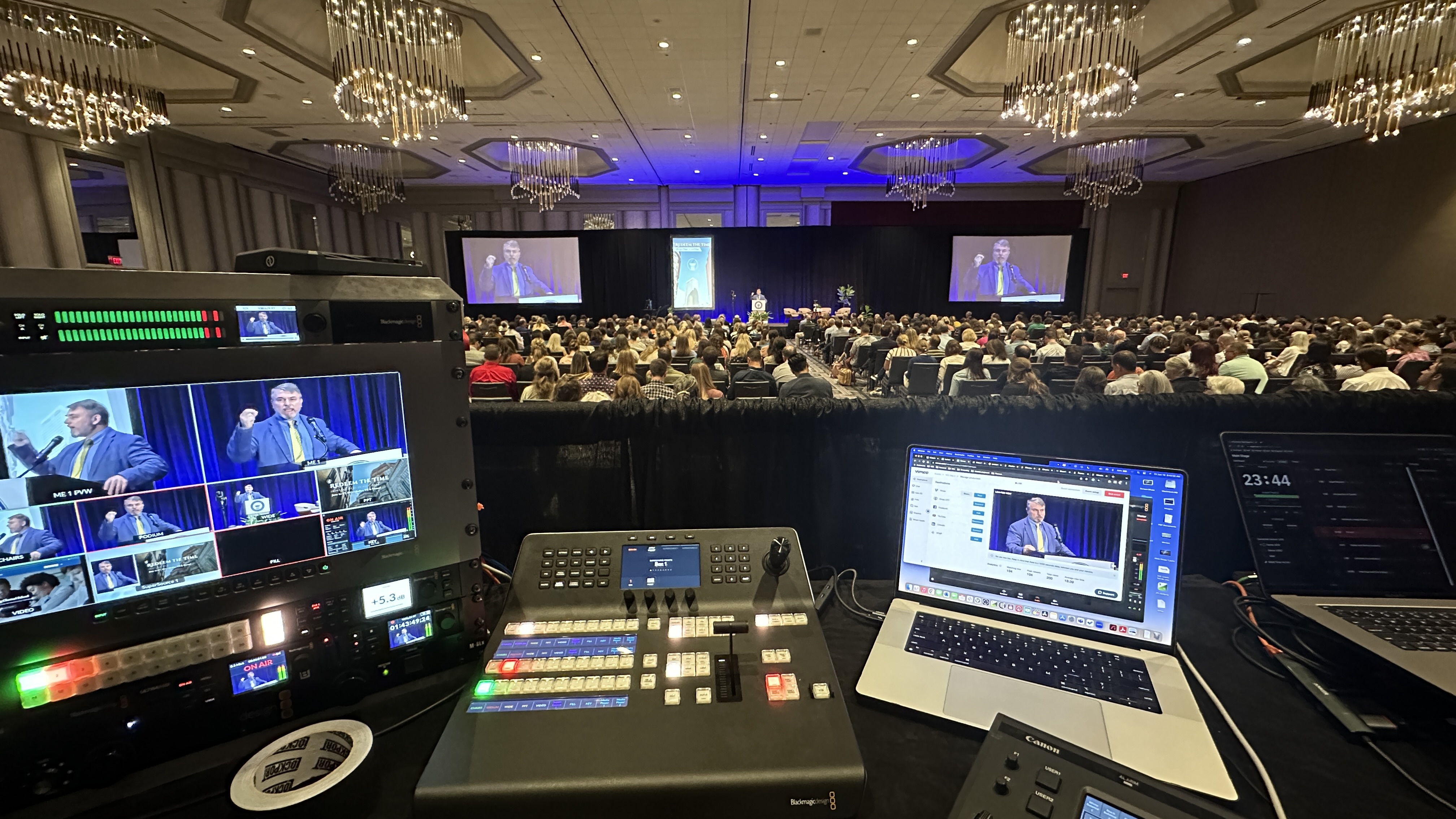
Every good ceremony stream is built from the same three angles, and missing any one of them creates a specific complaint you'll hear about afterward.
The wide. Locked off, showing the stage and the procession. This is the safety shot — it's what you cut to when anything goes wrong, and it gives remote viewers a sense of the room.
The stage handshake. A tight shot framed on the spot where the graduate receives the diploma. This is the shot families care about more than anything else. If you get one thing right, make it this. A PTZ camera like a Canon CR-N500 works well here because it can hold a precise preset for hours without an operator drifting.
The podium. Covering the speaker and whoever is reading names. On smaller ceremonies you can share this with the wide, but on anything with a keynote speaker you want it separate.
Beyond three, you're adding polish rather than fixing problems — a crowd shot, a processional angle from the balcony, a roving handheld for candids. Nice, not necessary. If you're weighing whether to add angles, multi-camera live production covers what each additional camera actually changes.
Ceremony audio is harder than it looks, and it's the number one reason families stop watching. The name reading has to be intelligible, and that almost never happens off a camera microphone.
The fix is simple in principle: take a direct feed from the venue's sound board — the same signal driving the house speakers — into a mixer like an Allen & Heath SQ5, and send that to the stream. A camera mic sitting fifty feet back in a gymnasium picks up reverb, HVAC, and a crowd cheering over the exact name a family is waiting to hear. A board feed doesn't.
Two things to sort out in advance. First, who controls the sound board — often it's the venue, sometimes it's an outside AV company, and occasionally it's a facilities employee who has never been asked for a feed before. Get that person's name and phone number weeks ahead. Second, whether the person reading names has a dedicated microphone or is sharing the podium mic with the procession, because sharing creates gaps. There's more on this in getting your livestream audio right.
If you can add one thing beyond the basics, add a lower-third graphic with each graduate's name as they cross. It solves a real problem: names get mispronounced, the audio gets stepped on by applause, and remote viewers frequently can't tell which student is theirs.
This requires a name list in ceremony order, delivered before the event, and someone operating graphics live. It's a genuine add — extra crew time and a rehearsal to sync it. Most schools we work with add it after their first year of streaming, once they've heard the feedback. If you do it, get the list at least a week out. Day-of name lists are how graphics operators end up flying blind.
For most schools, YouTube is the practical answer. It's free, it handles unlimited concurrent viewers, families already know how to use it, it works on smart TVs, and the recording is available immediately afterward for anyone who missed it.
Facebook Live is worth adding if your parent community lives there — you can push to both at once. Where it gets more involved is if the ceremony needs to be private or restricted, which comes up for K-12 more than higher ed because of student privacy policies. Unlisted YouTube links handle most of that; anything stricter means a platform with real access control, which changes the cost. Our walkthrough of hiring a company versus doing it yourself gets into where those platform decisions start to require outside help.
A ceremony stream is priced like any other in-person event: crew, cameras, audio, and how long you're on site. Most single-ceremony jobs land in a fairly predictable band.
A straightforward two-camera ceremony with a board audio feed and a YouTube stream generally starts around $3,900. Add a third camera, name graphics, and a longer program and you're typically in the $5,000 to $8,000 range. Schools running multiple ceremonies across a weekend — separate colleges, separate campuses — are usually looking at multi-day pricing, which for a full conference-scale weekend runs $11,000 and up depending on how many rooms and days are involved.
The one line item schools tend to forget is the setup and rehearsal window. Venue access the morning of, or ideally the day before, generally adds $2,250 to $3,750 and is where you discover the sound board feed is mono or the balcony power circuit is dead. It's worth it. For a fuller breakdown of what drives event pricing, see how much it costs to livestream an event.
Ceremony venues — gyms, arenas, performing arts centers, football stadiums — vary wildly, and the answers to a handful of questions change the price more than anything else.
Can we get a direct audio feed from the house board, and who authorizes that? Is there hardwired internet at the production position, or are we on WiFi? Where can the production desk sit with a clear sightline to the stage? Is there power at that position? What time can we load in, and does that conflict with a rehearsal or another ceremony? Is there a balcony or elevated position for the wide shot? Will the processional route change the framing?
Send those answers to any vendor you're quoting and you'll get real numbers back instead of ranges. Vendors who don't ask these questions before quoting are guessing, which is a preview of how the day will go — a pattern we've written about in why corporate livestreams fail.
Plan the after-life of the file before the ceremony, not after. Families will ask for it, and "we'll figure it out" turns into a month of email.
Decide who owns the recording, where it lives, how long it stays up, and whether individual graduates can get a clip of their own walk. That last one is a real request and a real amount of editing work, so price it in advance if you're going to offer it. Also decide whether the archived version stays public or goes unlisted after a set window — some schools keep ceremonies up permanently as recruiting content, others take them down after 90 days.
If you're mapping out a ceremony for next spring and want a second opinion on the venue, the camera plan, or what you should be budgeting, grab 20 minutes with me. No pressure and no pitch — I'm happy to tell you if what you've already got planned is fine. Book a time here.
Two is the practical minimum: a locked-off wide for safety and a tight shot on the diploma handshake. Three is better because it gives you a dedicated podium angle for speakers and name readers. Beyond three you're adding production polish rather than solving a problem.
For a spring ceremony, aim to have a vendor confirmed by January, and earlier if you can. Commencement season is tightly compressed, so most regional crews book out well before April. Fall and winter ceremonies have more slack but the same logic applies.
You can, and for a small ceremony with a good audio feed it's better than nothing. The two things that usually disappoint families are audio pulled from the camera instead of the sound board, and framing too wide to recognize their graduate. Fix those two and a simple setup goes a long way.
A two-camera ceremony with a board audio feed and a YouTube stream generally starts around $3,900. Adding a third camera, name graphics, or a longer program typically puts it in the $5,000 to $8,000 range, and multi-ceremony weekends are priced as multi-day events.
YouTube handles the vast majority of ceremonies well — unlimited viewers, no cost, easy for families, instant recording. If student privacy policy requires restricted access, an unlisted link covers most cases, and anything stricter means a platform with real access control, which adds cost.
The audio feed from the house board carries the spoken names. If you want on-screen name graphics, you'll need a list in ceremony order at least a week ahead and a crew member operating graphics live. It's the most-appreciated add-on and the one that requires the most preparation.
Ask any vendor this directly. A real answer includes a bonded cellular encoder or a tested second connection that takes over automatically, plus a local recording that continues regardless. The recording is your insurance policy — even in a worst case, families get the ceremony.
You should, and you should agree on the details before the event: who owns the file, where it's hosted, how long it stays available, and whether individual graduate clips are included. Individual clips are a meaningful amount of editing, so price that in advance rather than assuming it.
Mark runs DFW Live Stream and has been producing corporate livestreams, conferences, town halls and webinars across Dallas–Fort Worth and around the country since 2017. He writes these from the production desk, not a marketing department, and uses AI tools to help draft and structure them. Every post is read, fact-checked and edited by him before it goes live.