 By Mark WhiteOwner & Executive Producer, DFW Live Stream
A product launch is one of the few events where you only get one shot. The reveal happens once. The press is watching once. Your customers form an impression once. So when a company asks me what it takes to livestream a product launch, my honest answer is: more than people expect, because the stakes are higher than a normal webinar or town hall.
Here's the short version. A product launch livestream is a brand moment, not just a broadcast. It usually has to serve three audiences at the same time, an in-room crowd, an online audience, and press or analysts. It often runs on a tight reveal or embargo schedule, it needs to reach multiple platforms, and it has to look polished because the people watching are deciding whether your brand looks credible. That combination is what separates a launch from an ordinary event, and it's what shapes everything from crew size to backup plans to budget.
Below I'll walk through what actually goes into one, what you're paying for, and the questions worth answering before you book anyone.
A launch carries reputational weight that a routine internal event doesn't. If the stream stutters during the reveal, that's the clip that gets shared, and that's the impression that sticks.
Most corporate livestreams have a forgiving audience. An all-hands or a training webinar can survive a hiccup because the people watching already trust you. A product launch is the opposite. You're often introducing yourself to people who don't know you yet, customers evaluating whether to buy, journalists deciding whether to cover you, partners weighing whether to bet on you. The production quality becomes part of the message. If it looks sharp and runs clean, the product feels real and ready. If it looks rough, people quietly wonder what else is half-baked. That's why I treat launches as high-stakes by default, and why I won't run one with a single operator and no backup. For the broader picture of how these productions come together, our guide on what's included in a corporate livestream package is a good starting point.
Nearly every product launch I get asked about is hybrid, meaning there's a live in-room audience and an online audience watching at the same time. Serving both well is a different job than serving either one alone.
The room needs the experience to feel like an event, good sound, clear visuals on screen, energy. The online audience needs framing, pacing, and audio built for a screen, not a stage. When you only design for the room, the stream feels like a security camera in the back. When you only design for the stream, the room feels flat. Doing both at once is where the real production work lives, and it's the part DIY setups almost always underestimate. If you want to go deeper on getting that balance right, we've written about hybrid event best practices and what hybrid event production in Dallas typically involves.
Launches live and die on timing. There's usually a moment, the reveal, that everything builds toward, and often an embargo that controls exactly when information can go public.
That timing pressure shapes the whole show. The reveal has to hit on cue, the graphics have to fire at the right second, and the stream can't go live a beat too early or leak anything before the embargo lifts. When we produce a product launch, a big chunk of the prep is rehearsing those transitions so the reveal lands clean, the music swells when it should, and the camera is on the right person at the right moment. None of that happens by accident. It happens because someone scripted it, rehearsed it, and has a plan for what to do if the presenter goes off-book. This is also why a run-through matters so much, which is something we cover in what to expect when you hire a livestream company.
A launch usually needs to be everywhere your audience is, your own site, plus YouTube, LinkedIn, maybe Facebook or a press portal. Pushing to all of them at once sounds simple and isn't.
Each platform has its own quirks, and a stream that looks fine on one can look wrong on another if nobody's watching the output. The goal is reach without compromise, the same polished feed landing cleanly everywhere, with someone keeping an eye on each destination during the show. We use a bonded encoder, the LiveU Solo Pro, so the connection stays solid even when venue internet is shaky, which at hotels and convention centers it often is. Reach only counts if the stream stays up the whole time, and that reliability is worth more than any single platform feature.
For a launch I plan around clean visuals, reliable audio, and zero single points of failure. That usually means multiple cameras, a proper switcher, real audio, and backups for the pieces that can't be allowed to fail.
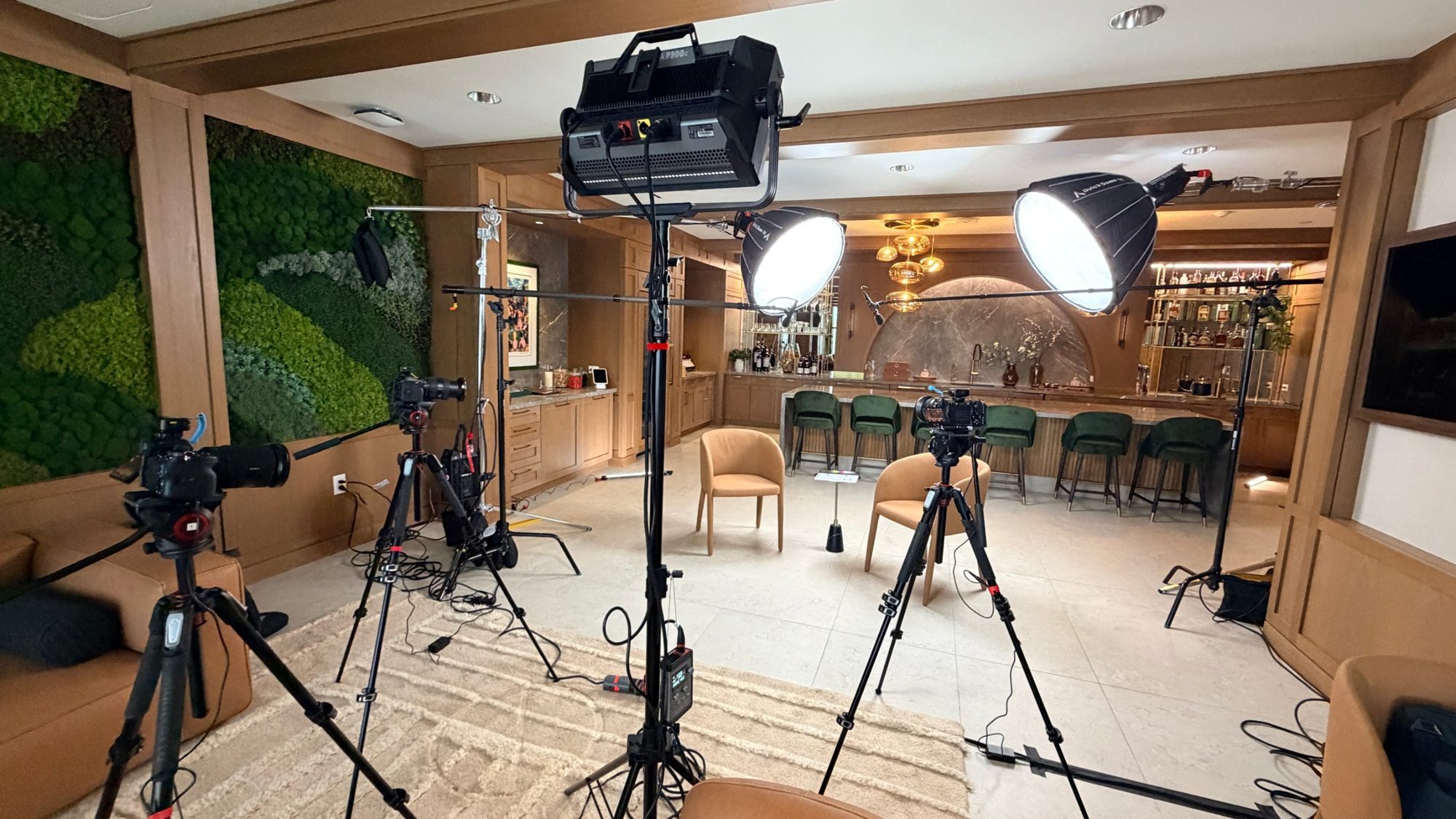
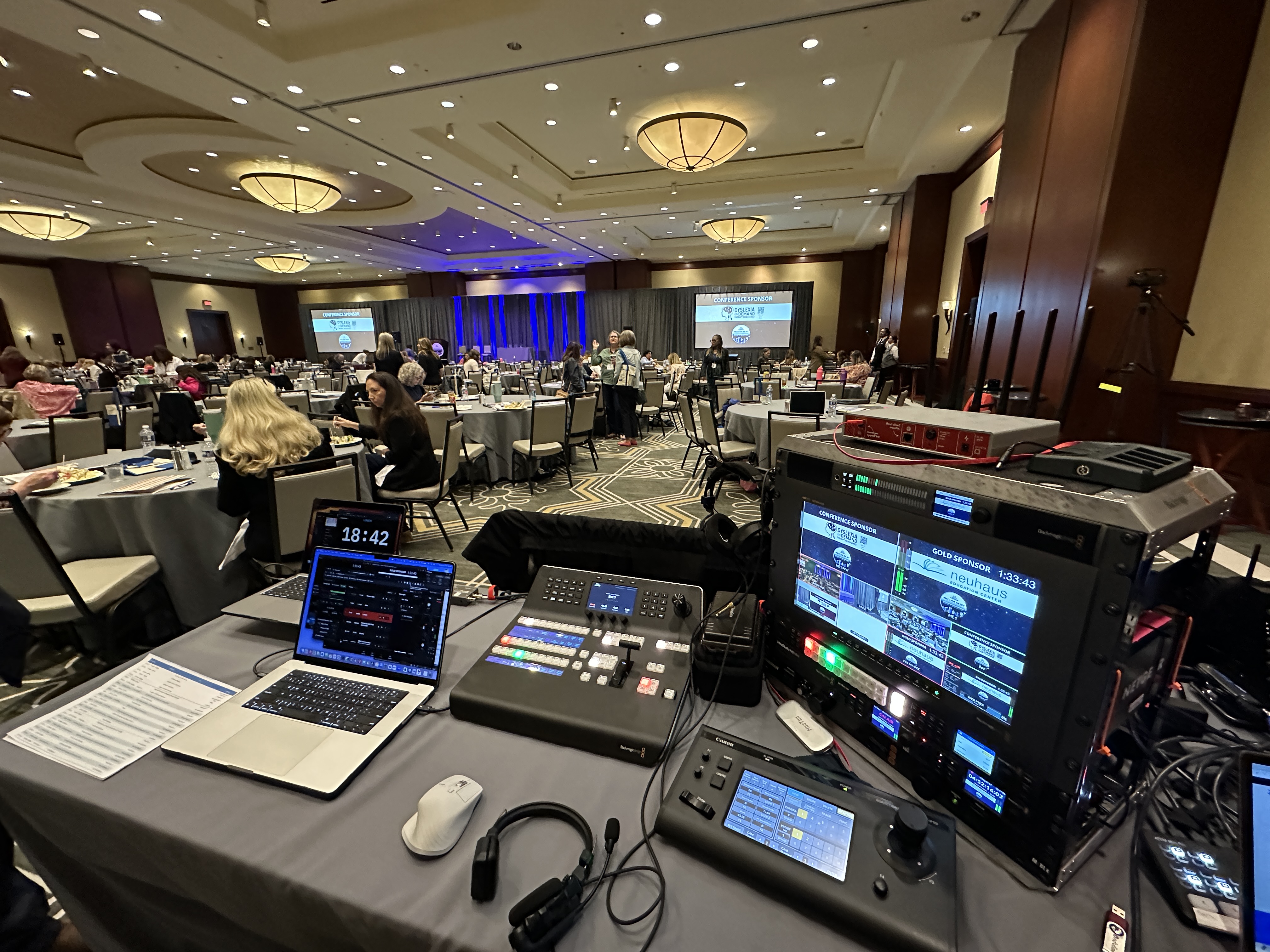
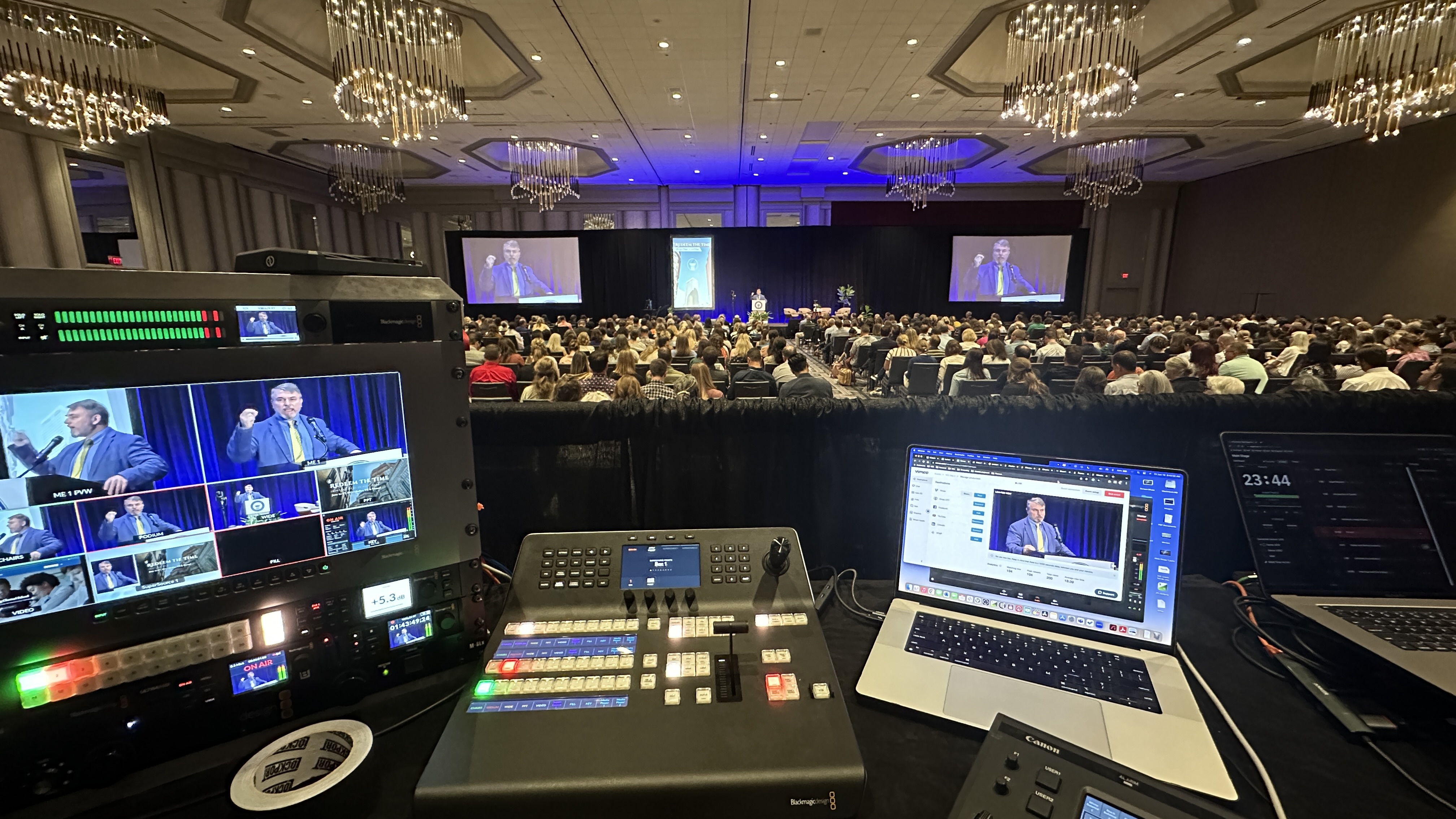
In practice that's a multi-camera setup so you can cut between the presenter, the product, and the room, which keeps the stream feeling alive instead of static. We run Canon CR-N500 PTZ cameras into a Blackmagic ATEM switcher so a single operator can cover several angles cleanly. Audio runs on Sennheiser wireless mics through an Allen & Heath SQ5 mixer, because nothing tanks a launch faster than a presenter no one can hear. If you only fix one thing about a stream, fix the sound, which we get into in our piece on getting your livestream audio right. For the full rundown of how a multi-angle show is built, see multi-camera live production.
On a high-stakes show, you're not paying for gear, you're paying for it not to fail. Redundancy is the whole point, because there's no second take on a launch.
That means a backup encoder, a backup audio path, and a crew that can troubleshoot live without the audience ever noticing. When something does go sideways, and at enough events something eventually does, the difference between a great vendor and a cheap one is whether the audience finds out. A launch with a live reveal and press in the room is exactly the kind of event where I won't cut corners on backups. This is also a big reason DIY launches go wrong, which we break down in why corporate livestreams fail and livestream company vs DIY streaming.
For anything high-stakes I run a two-person crew minimum, no exceptions. One person can't direct the show, ride audio, watch the stream output, and fix a problem all at once, and a launch gives you no room to be caught flat-footed.
The other thing worth knowing about working with a boutique shop like mine, you get me or my lead Eli, not a random subcontractor who showed up that morning with no context on your event. On a launch, that continuity matters. The person running your show was in the planning calls, knows the reveal cue, and knows what the client cares about. Bigger production companies often hand your event to whoever's free, and you find out at load-in. If you're weighing local options, our note on finding a livestreaming company near me walks through what to look for.
Pricing depends entirely on scope, but I can give you honest ranges. A launch is rarely at the bottom of them, because the stakes push you toward more cameras, more crew, and more backup.
A simple virtual-only stream with a single operator generally starts around $1,595. An in-person event with a real crew starts around a $3,900 floor. Most product launches land in the multi-camera or hybrid range, typically $5,000 to $15,000, because they need multiple angles, proper audio, and redundancy. Multi-day launch events or roadshows can run $11,000 to $30,000 and up. These are general ranges, not a rate card, every launch gets quoted on its actual scope. If you want to understand what drives the number, we lay it all out in how much it costs to livestream an event.
The reveal landing clean is the first measure, but the real payoff shows up in the numbers afterward. A launch that performs gives your marketing team something to point to.
Beyond the live moment, you'll want to look at who watched, how long they stayed, where they came from, and what they did next. Those metrics tell you whether the launch reached the right people and moved them, and they help you justify the investment for the next one. We get into the measurement side in our guide to measuring livestream ROI. A launch isn't just a one-time event, it's an asset you can clip, repurpose, and learn from.
The sooner the better, but four to six weeks is a comfortable window for a hybrid launch with a real reveal. That gives us time to scout the venue, plan the show, and rehearse the transitions. For something simple and virtual, we can move faster, but a launch with press in the room rewards lead time.
Yes, that's standard for a launch. We can push the same polished feed to your site, YouTube, LinkedIn, and others at the same time, with someone watching each destination during the show. The point is reach without the stream looking wrong on any one platform.
This is exactly why we use a bonded encoder like the LiveU Solo Pro and build in backup connectivity. It keeps the stream up even when venue WiFi gets flaky, which at hotels and convention centers it often does. On a launch, we plan around the assumption that the network will misbehave, not that it won't.
For most launches, yes. A single locked-off camera makes the stream feel static and lifeless, which works against the energy a launch needs. Multiple angles let us cut between the presenter, the product, and the room, so the online audience feels like they're part of the moment instead of watching from the back.
Yes, and it's one of the things we rehearse most. We script the reveal so the graphics, music, and camera all hit on cue, and we make sure nothing goes public before the embargo lifts. That kind of precision is the difference between a reveal that lands and one that fizzles.
You get me or my lead Eli, not a subcontractor who's seeing your event for the first time at load-in. The person running your show was in the planning, knows your reveal cue, and knows what you care about. For a high-stakes launch, that continuity is part of what you're paying for.
Two people, minimum. One person can't direct, manage audio, watch the stream, and troubleshoot all at once, and a launch gives you no margin for that. A two-person crew means someone always has eyes on the output while someone else handles whatever comes up.
Beyond the live stream itself, a launch becomes an asset. You can clip the reveal, repurpose highlights for social and sales, and review the performance metrics to plan the next one. A good launch keeps paying off long after the broadcast ends.
If you're planning a product launch, reach out and we'll talk through what it needs. Every launch is different, and the right setup depends on your room, your audience, and what's riding on the reveal. No pressure, just a conversation about getting it right.
Mark runs DFW Live Stream and has been producing corporate livestreams, conferences, town halls and webinars across Dallas–Fort Worth and around the country since 2017. He writes these from the production desk, not a marketing department, and uses AI tools to help draft and structure them. Every post is read, fact-checked and edited by him before it goes live.