 By Mark WhiteOwner & Executive Producer, DFW Live Stream
Here's the short version: a live event production company is the vendor that owns everything the audience sees and hears during your event, in the room and on the stream. Cameras, switching, audio, graphics, the broadcast feed, the recording, and the people running all of it. If you're choosing one, judge them on three things: whether they've run rooms like yours, whether one person is accountable for the whole show, and whether their quote tells you exactly what's covered. Everything else in this post is detail on how to check those three things.
I've spent a lot of years on the production side of corporate events in Dallas–Fort Worth and around the country, and I've watched planners get burned in the same handful of ways. Almost none of those were about gear. They were about hiring the wrong kind of company for the job, or not asking the questions that would have exposed the gap. This is the guide I'd hand a friend who was about to sign a contract.
A live event production company takes responsibility for the technical execution of a live program from planning through delivery. The output is a show that runs on time, sounds clean, and looks intentional, whether the audience is 200 people in a ballroom, 2,000 people online, or both.
In practice that means a scope like this: a discovery call to understand the event, a site visit or venue walkthrough, a run of show built with your team, camera coverage of the stage, a live switch between those cameras and your slides, program audio that both the room and the stream can hear, graphics like lower thirds and sponsor loops, encoding and delivery to whatever platform you've picked, a rehearsal, the live show itself, and a recording handed back afterward. Some companies also handle staging, lighting, and screens. Some, like us, focus on the video, audio, and broadcast layer and partner with the venue or a staging vendor for the rest.
The word “production” is doing real work in that name. A camera operator captures. An AV company provides. A production company is accountable for the result.
These four get used interchangeably and they're not the same thing. Picking the wrong category is the most common expensive mistake I see, because each one is optimized for a different outcome.
The venue's AV company is built around equipment in the building: projectors, screens, house sound, microphones, and a tech to run them. They're excellent at making the room work. They are usually not built around a broadcast, and when a stream gets added to their scope it's often a single wide camera and an encoder someone set up that morning. I wrote a full comparison in livestream company vs. AV company if you want the long version.
A livestream vendor is focused on getting a feed online reliably. That's a real skill, and for a simple single-camera program it may be all you need. What it often leaves out is the multi-camera switching, the graphics, and the room-side coordination that makes a corporate program feel produced.
A video production crew shoots for the edit. Their instincts are cinematic: pretty shots, b-roll, a polished deliverable weeks later. Ask them to switch a live program and you'll usually get one of two things: a great recording with no live output, or a live output that looks like a shoot instead of a show. The distinction is spelled out in live event video production and how it differs from streaming.
A live event production company sits in the middle of all three. It brings the broadcast mindset of a stream vendor, the coverage of a multi-camera crew, and the room awareness of a good AV team, and it puts one person in charge of the whole thing. That's the category you want when the event has an audience in two places, or when the recording matters as much as the live show.
When a company calls itself full-service, the quote should make that concrete. Here's what I'd expect to see on a real live event production scope, and what I'd question if it's missing.
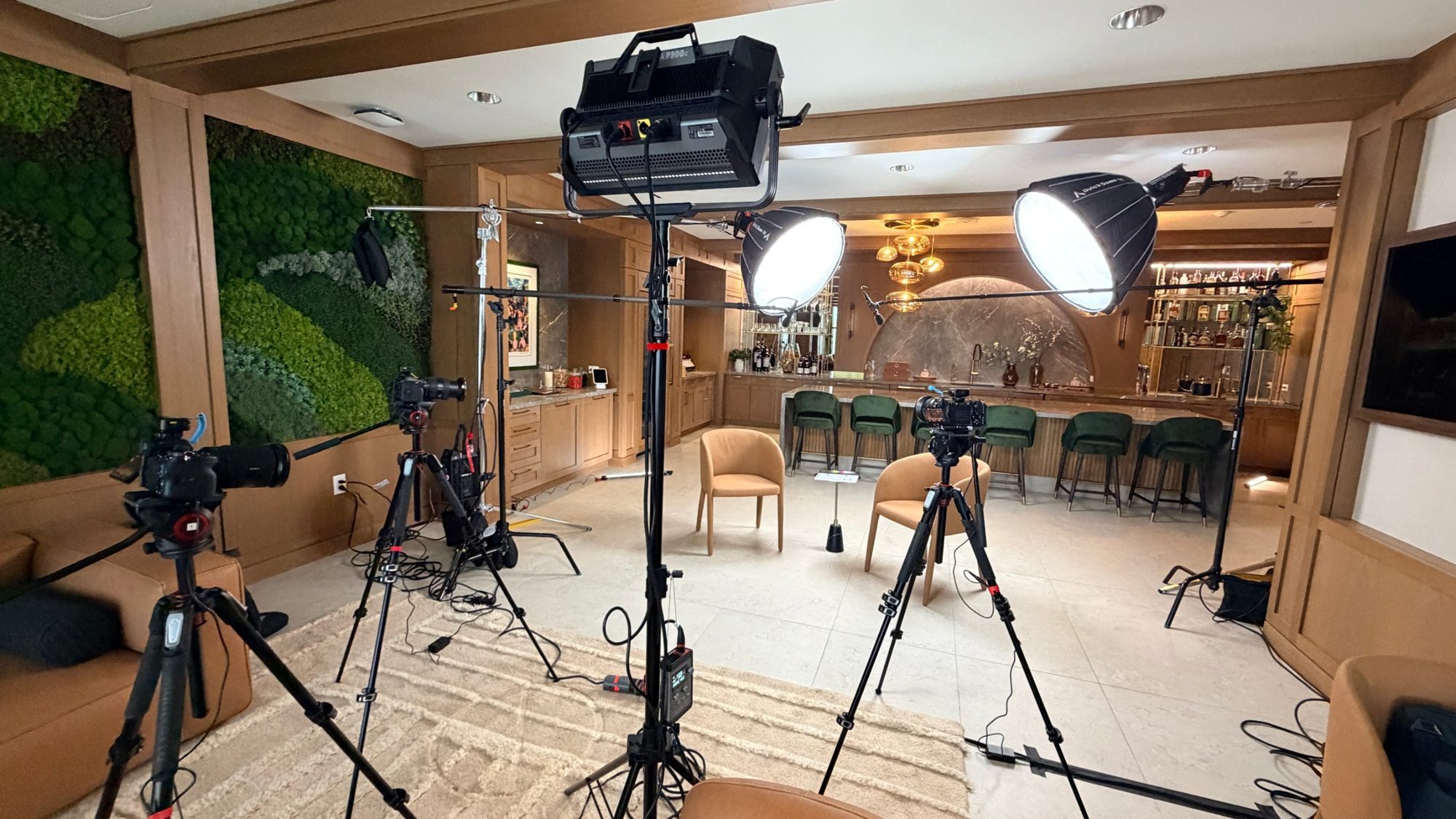
Pre-production comes first: a discovery call, a walkthrough or venue call, a run of show, and a tech rehearsal. If the quote has none of that and goes straight to “day-of crew and gear,” you're buying labor, not production. Camera coverage should be spelled out by count and role, not just “cameras.” Two operated cameras plus a locked wide is a very different program from three PTZ cameras run by one operator, and both can be right depending on the room. We use Canon CR-N500 PTZ cameras a lot for exactly this reason: fewer bodies in the room, more angles on the stream.
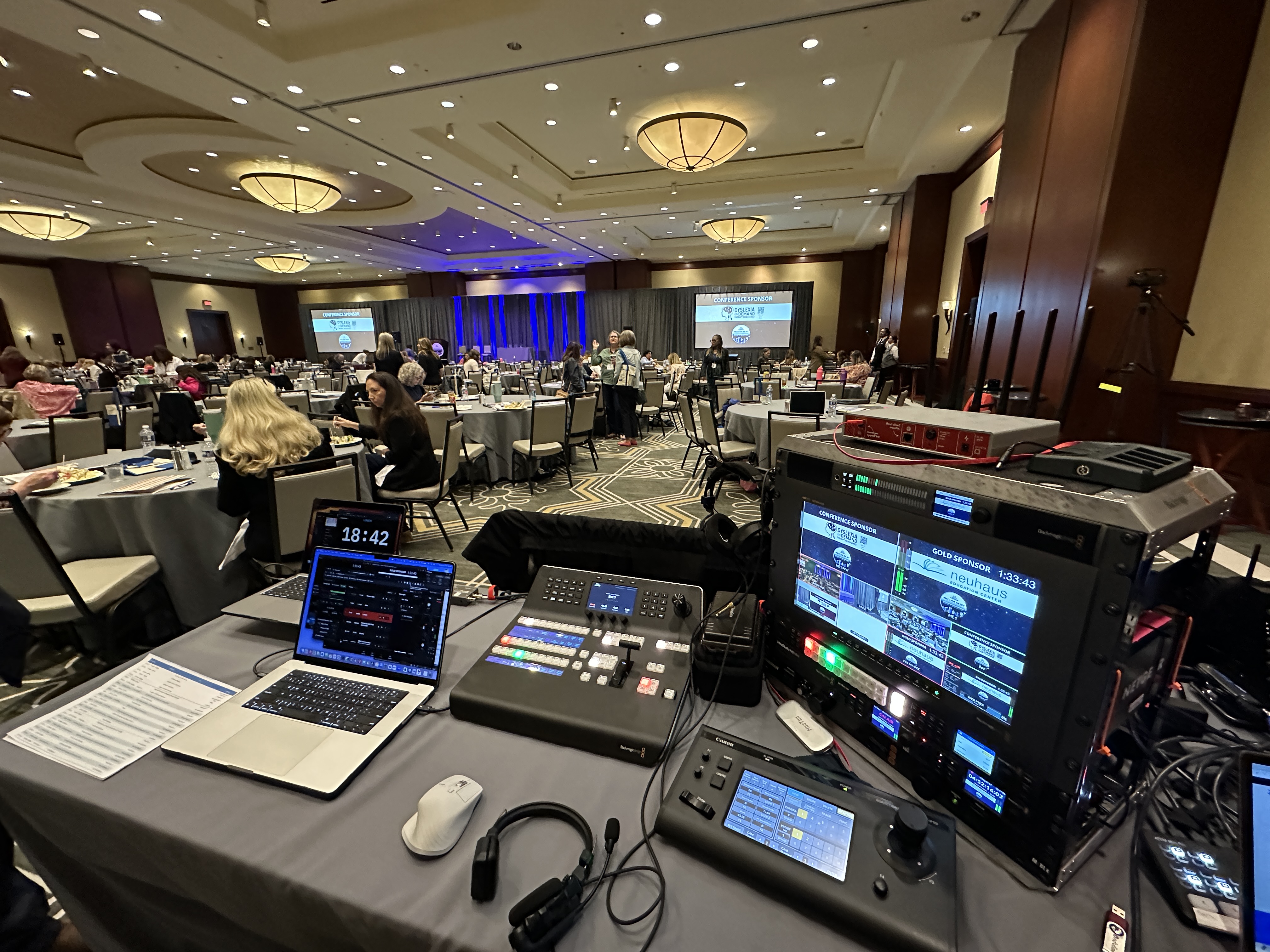
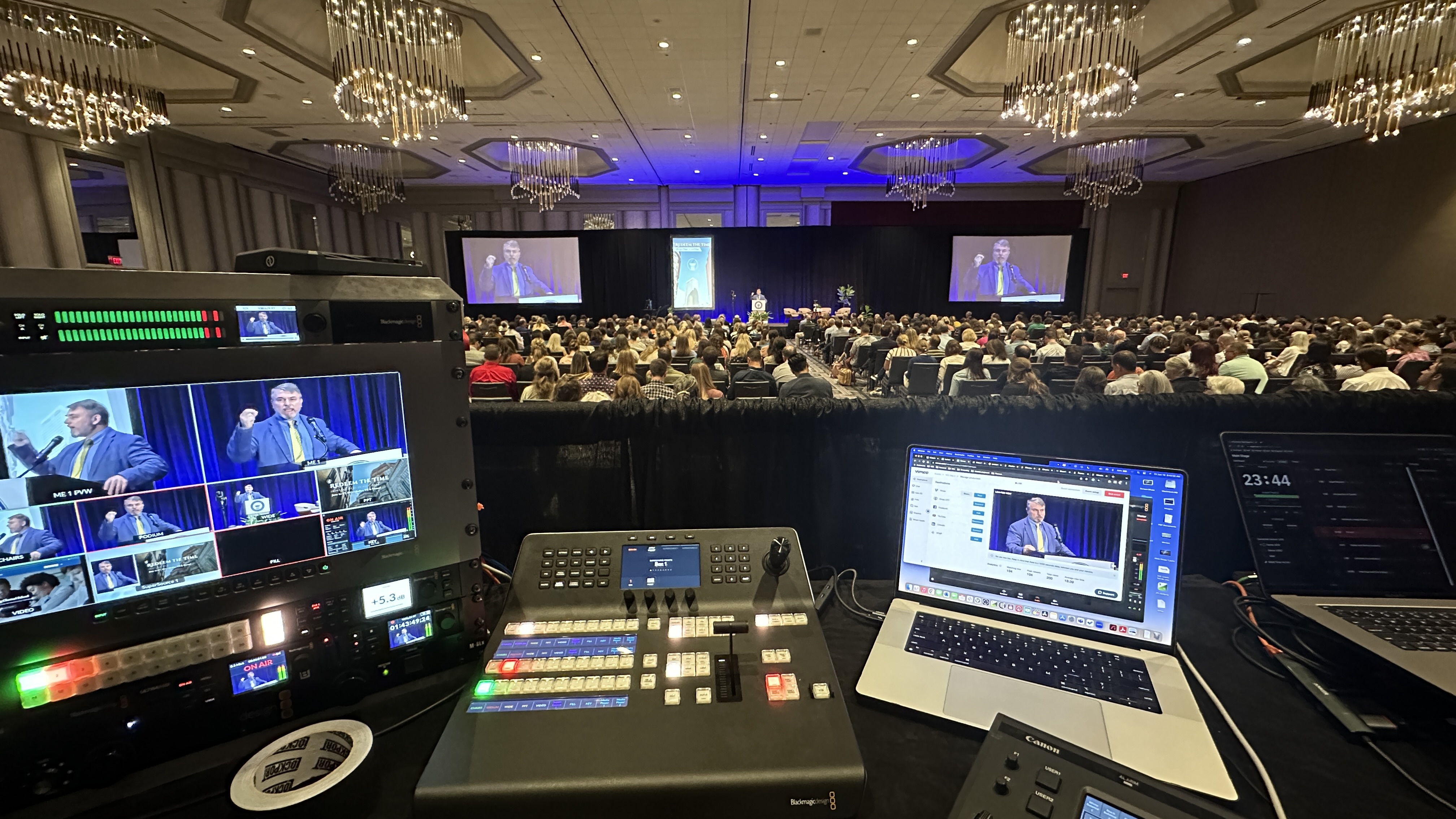
Switching and graphics are where the program starts to look like television. A Blackmagic ATEM switcher, lower thirds, slide integration, and a countdown or holding screen are the baseline. Audio should be its own line, with a real mixer like an Allen & Heath SQ5 and wireless from Sennheiser or equivalent, because the stream mix and the room mix are different jobs. Delivery should name the platform and the backup: hardline plus a bonded cellular encoder like a LiveU Solo Pro is the standard we run for anything that can't fail. And the deliverables afterward should be clear: raw recording, edited program file, or both, and by when.
For a package-level view of this, what's included in a corporate livestream package walks through it line by line.
You don't need to understand the gear to evaluate a production company well. You need to ask about outcomes and watch how they answer. These are the questions that separate the companies I'd hire from the ones I'd pass on.
Ask for a recording of a comparable event. Not a highlight reel, a full program. Highlight reels hide the eleven minutes of dead air while someone fixed the audio. Watch the transitions, listen to the Q&A audio, and see if the slides are readable. Ask who your single point of contact is on show day and what their role is. If the answer is “the camera operator,” there's no director, and you'll end up directing. Ask what happens if the venue internet fails. The right answer involves a backup path they've already used, not “we'll test it that morning.”
Ask how they handle a speaker who goes long or a session that moves. The good ones talk about run-of-show changes like they're normal, because they are. Ask about the rehearsal: is it in the quote, how long is it, and who from your side needs to be there? And ask what they need from you and when. A company that hands you a prep list is a company that has done this before. I put the whole checklist in what to expect when you hire a livestream company.
Some warning signs are subtle and some are loud. The quiet ones cost more, because you don't notice until show day.
A quote with no pre-production line is the biggest one. It means they plan to figure out your event when they arrive. “We can do that” to every request without a follow-up question is another; a real production company pushes back on things that won't work in your room. No mention of audio as a separate discipline is a tell, because audio is where corporate livestreams most often fail. I broke down the pattern in why corporate livestreams fail, and audio is at the top. Vague crew descriptions like “two techs” without roles means nobody has designed the show yet. And a price that is dramatically lower than everyone else's almost always means one operator doing three jobs, which is fine for a small internal meeting and a real risk for a conference.
Pricing scales with crew count, camera count, and days on site, not with the size of your audience. A 50-person all-hands and a 500-person keynote can cost roughly the same if the production scope is the same.
As a general guide from our own quoting: a produced in-person event with a two-person crew starts around $3,900 for the day. Multi-camera and hybrid programs typically land between $5,000 and $15,000 depending on cameras, crew, and how much room-side integration is involved. Multi-day conferences generally run $11,000 to $30,000 or more once you add breakout rooms and additional operators. A dedicated setup and testing day, which I'd strongly recommend for anything in a large ballroom, usually adds $2,250 to $3,750. Domestic travel for events outside DFW generally adds $3,800 to $4,600 for a small crew. Fully virtual programs are a different model with published pricing on our webinars page.
What those numbers buy is the difference between a company that shows up with gear and one that shows up with a plan. The full breakdown, including what moves the number up or down, is in how much it costs to livestream an event.
Not every event needs full production, and a good company will tell you that. The question is what the live output has to do for the business.
If the program is a small internal meeting where the stream is a convenience and nobody will rewatch it, a livestream vendor or even a well-run in-house setup may be enough. If the recording will be used for marketing, training, or investor communication, if there's a remote audience that matters as much as the room, if there are multiple speakers and slide decks and a schedule that has to hold, or if there are sponsors or executives watching the output, that's production territory. Multi-camera coverage is usually where the line falls, and multi-camera live production explains what changes when you cross it.
Production companies are capacity businesses: a fixed number of crews and kits, booked by date. The best ones fill up for peak conference season months out.
For a single-day corporate event, four to six weeks gives everyone room for a proper walkthrough and rehearsal. For a multi-day conference or anything with breakouts, two to three months is comfortable. Spring and fall are the crunch, and Dallas conference weeks get tight fast. If you're inside two weeks, call anyway; it's often doable, but the pre-production gets compressed and that's where the risk lives. There's a longer version in how far in advance to book a livestream company. And for most single-city events, a company near the venue wins on cost and site knowledge; our guide to finding a live streaming company near you covers how to sort the categories in any market.
If you're sizing up a live event production company for something coming up, I'm happy to look at the scope with you, whether or not we end up being the right fit. Grab 20 minutes with me and bring the run of show, even if it's rough.
It plans and executes the technical side of a live program: camera coverage, live switching, program audio, graphics, the stream or broadcast feed, the recording, and the crew that runs it all. The defining trait is accountability for the finished show, not just providing equipment or people.
An AV company is built around equipment in the room: screens, projection, house sound, and mics. A production company is built around the output, especially the multi-camera broadcast and recording. Many events need both, and the best results come when the two are coordinated in pre-production rather than meeting for the first time on show day.
A produced in-person corporate event with a two-person crew generally starts around $3,900 per day. Multi-camera and hybrid programs typically run $5,000 to $15,000, and multi-day conferences $11,000 to $30,000 or more. Setup days, travel, and additional breakout rooms add to that.
Either can work. What matters is that one person is directing the show and that the audio handoff between the room system and the broadcast is designed before show day. If your venue's AV team is strong, a production company that partners well with them is often the most cost-effective path.
Ask for a full recording of a comparable event, who your single point of contact is on show day, what the backup is if venue internet fails, whether a rehearsal is included, and what they need from you and when. The answers tell you more than a gear list ever will.
Not always. A small internal meeting with a convenience stream can be handled by a livestream vendor or a well-run in-house setup. Once there's a remote audience that matters, multiple speakers, sponsors, executives, or a recording you'll reuse, production pays for itself.
Four to six weeks for a single-day corporate event, two to three months for a multi-day conference. Spring and fall fill early. Shorter timelines are often workable, but pre-production gets compressed and that's where most risk lives.
Most do. Expect a travel line on the quote, generally $3,800 to $4,600 for a small crew on a domestic event, plus a setup day if the venue is unfamiliar. For single-city events, a strong local company usually wins on cost and site knowledge.
Mark runs DFW Live Stream and has been producing corporate livestreams, conferences, town halls and webinars across Dallas–Fort Worth and around the country since 2017. He writes these from the production desk, not a marketing department, and uses AI tools to help draft and structure them. Every post is read, fact-checked and edited by him before it goes live.