 By Mark WhiteOwner & Executive Producer, DFW Live Stream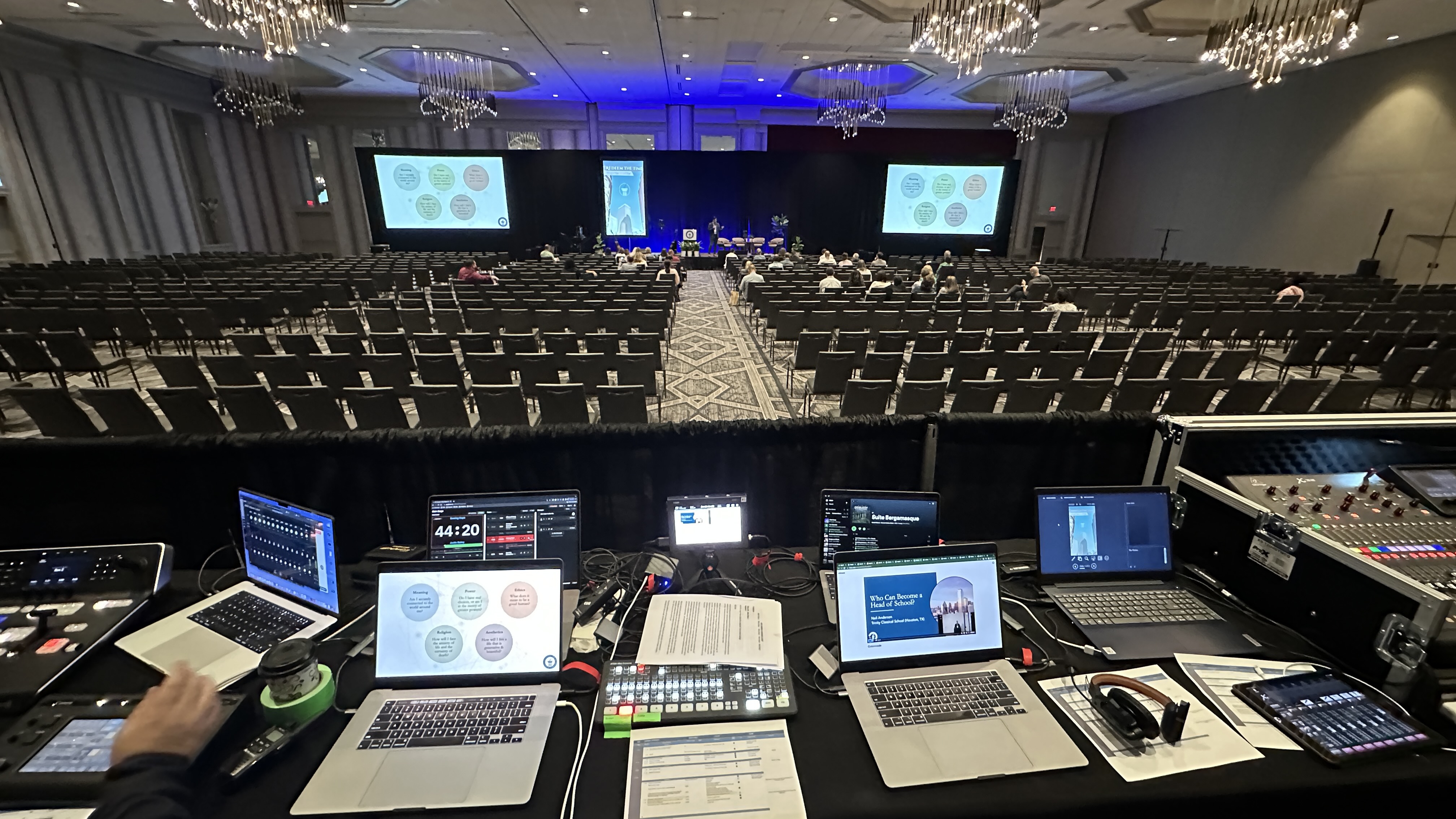
Updated June 2026.
Hiring a livestream production company comes down to five things: do they own professional equipment, do they bring backup gear, do they handle audio properly, have they produced events like yours before, and will the people who quoted the job actually show up on event day. If a company can't give you clear, specific answers on all five, keep looking.
I'm Mark White, owner of DFW Live Stream. I've been producing corporate livestreams across Dallas-Fort Worth for over ten years — conferences, town halls, hybrid events, investor meetings, graduations. This guide is the advice I'd give a friend who's hiring a livestream production company for the first time. No sales pitch, just the stuff that actually matters when your event is on the line.

A professional livestream production company manages every technical element of your live broadcast — cameras, audio, video switching, encoding, graphics, and stream monitoring — so your team can focus on the event itself.
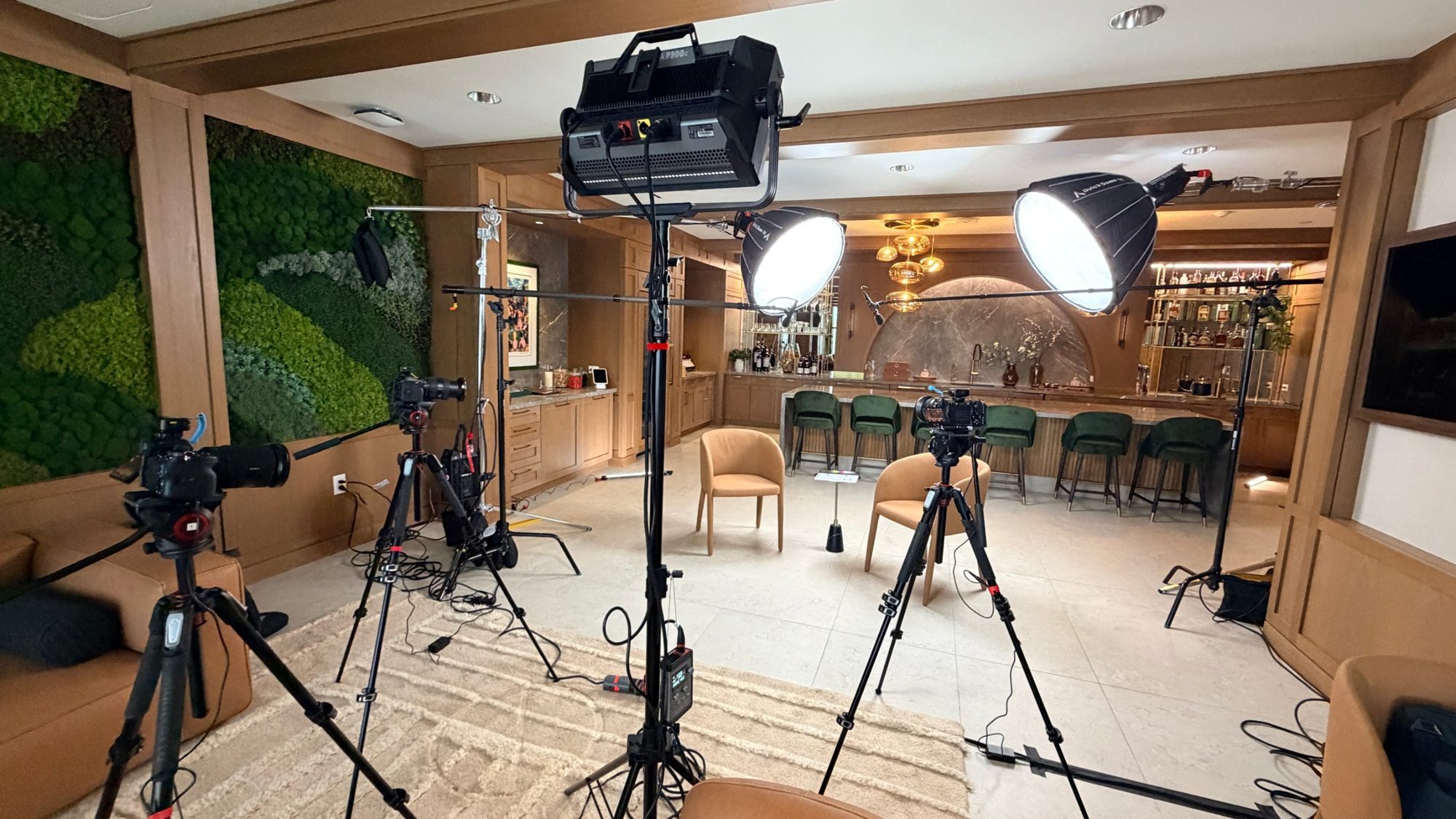
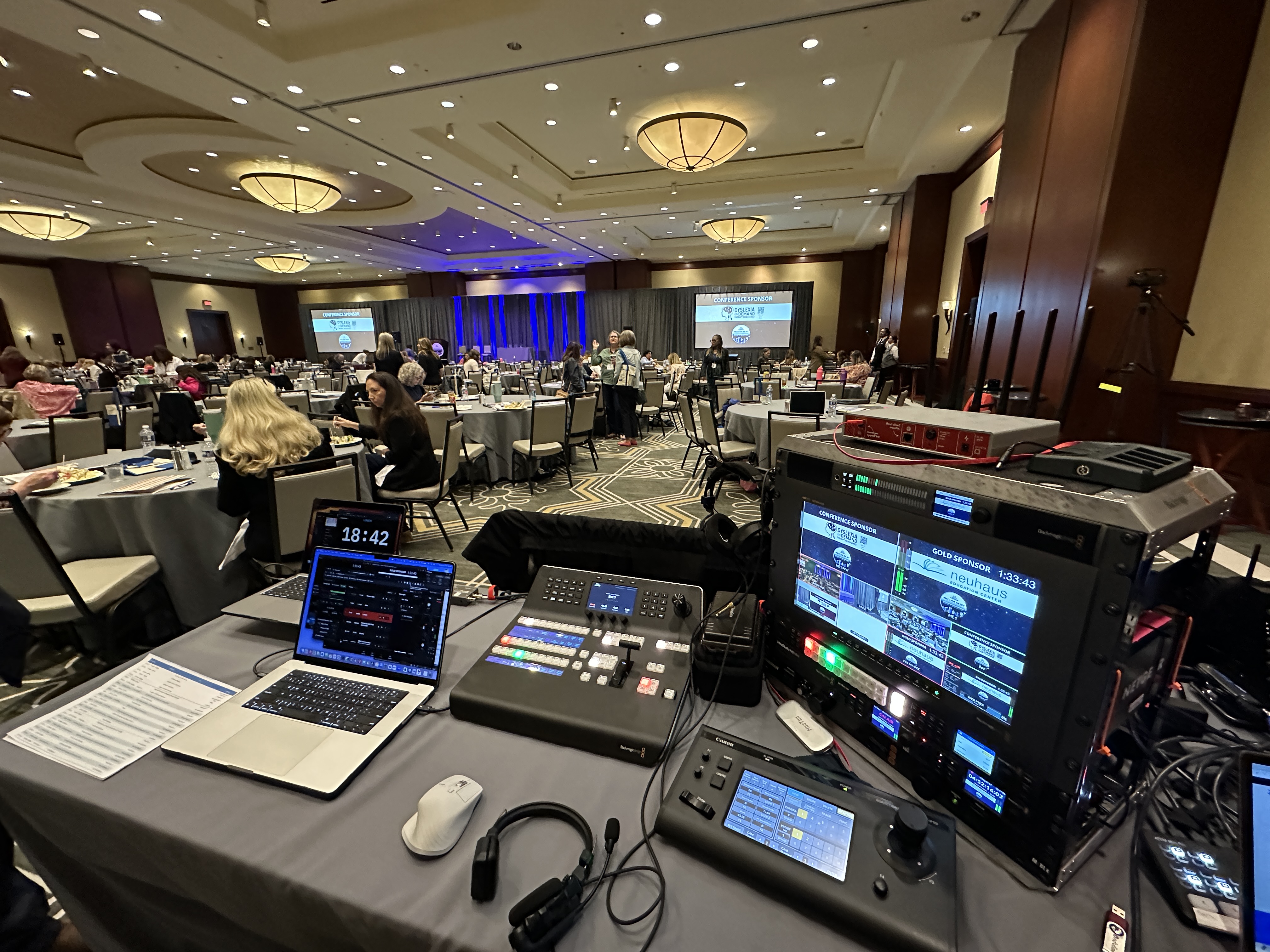
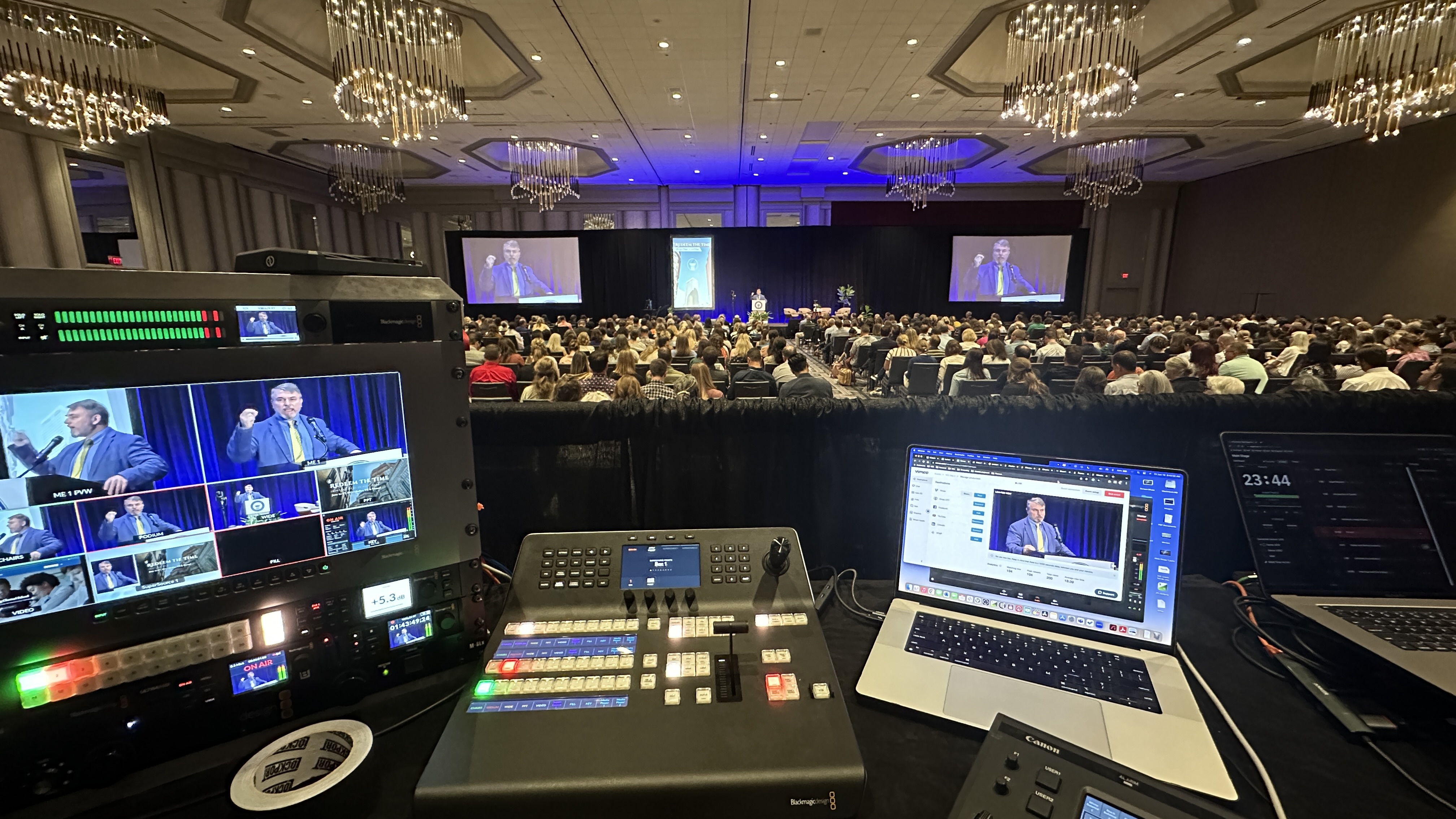
That means running multiple camera angles through a video switcher, mixing audio from wireless microphones and soundboards, encoding the signal through a bonded cellular encoder, and watching everything in real time to catch problems before your audience does. At our company, a typical corporate event uses Canon CRN500 PTZ cameras, a Blackmagic ATEM switcher, Sennheiser wireless microphones, and a LiveU Solo Pro encoder that bonds 4G LTE, WiFi, and hardwired ethernet together. If one internet source drops, the others keep the stream running.
Compare that to the "just set up a webcam and share the Zoom link" approach, and the difference becomes obvious. A professional production company versus DIY streaming isn't just about video quality — it's about reliability, redundancy, and the ability to handle problems without your audience ever noticing.

Before diving into how to evaluate production companies, it helps to understand what you're actually choosing between. Here's how the three main options stack up for a typical corporate event.
Not every meeting needs a full production crew — a quick team Zoom call is fine with a laptop. But certain events demand professional livestream production because the stakes are too high for anything less.
You need a production company when your event has more than 50 remote viewers expecting a polished experience. You need one when executives or leadership are presenting and the broadcast reflects directly on your brand. You need one when there are multiple speakers, panel discussions, or breakout sessions that require seamless switching between sources. And you definitely need one when your organization is spending real money on the event itself — venue, catering, travel — and the stream is how hundreds or thousands of additional people experience that investment.
A financial services company here in Dallas learned this the hard way. They hired a freelancer for $1,500 to stream their annual town hall — consumer webcam, no backup internet, running on venue WiFi. The stream dropped 30 minutes into the CEO's keynote and never recovered. 150 remote employees missed the whole thing. The coordinator called me two weeks later for their product launch and told me, "The cheap option cost us way more than your quote ever would have."
The evaluation process comes down to asking specific questions and listening for specific answers. Vague responses are a red flag at every stage. Here's what to dig into.
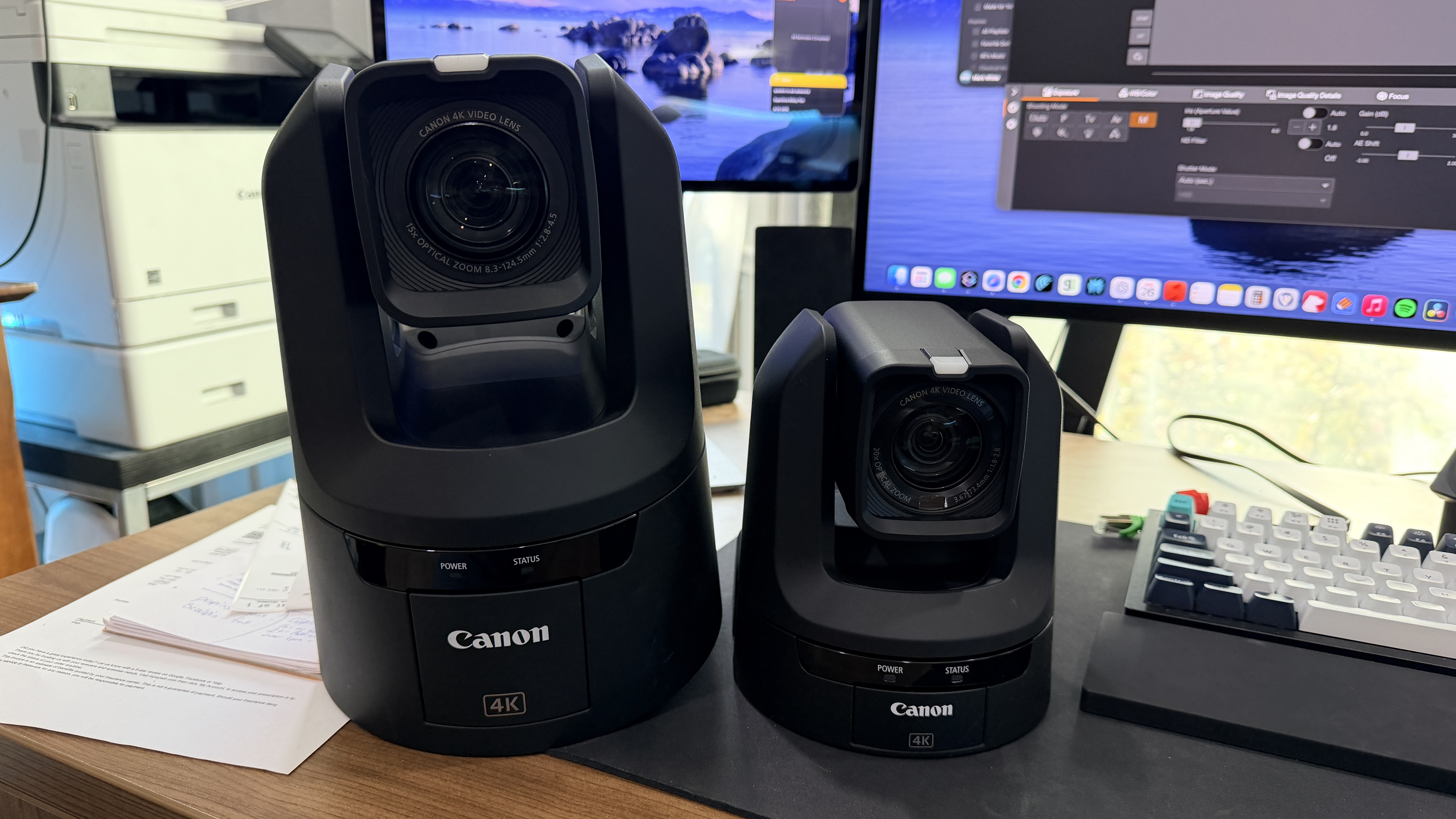
A company that owns its gear has tested every cable, camera, and connection point dozens of times and knows its equipment inside and out. A company that rents gear for each job is essentially learning the equipment on your dime.
Ask what cameras they use, what switcher they run, how they handle audio, and what encoder delivers the stream. If the answers are vague — "we use industry standard equipment" — that tells you something. A company that's invested in their gear will name specific models because they're proud of what they've built.
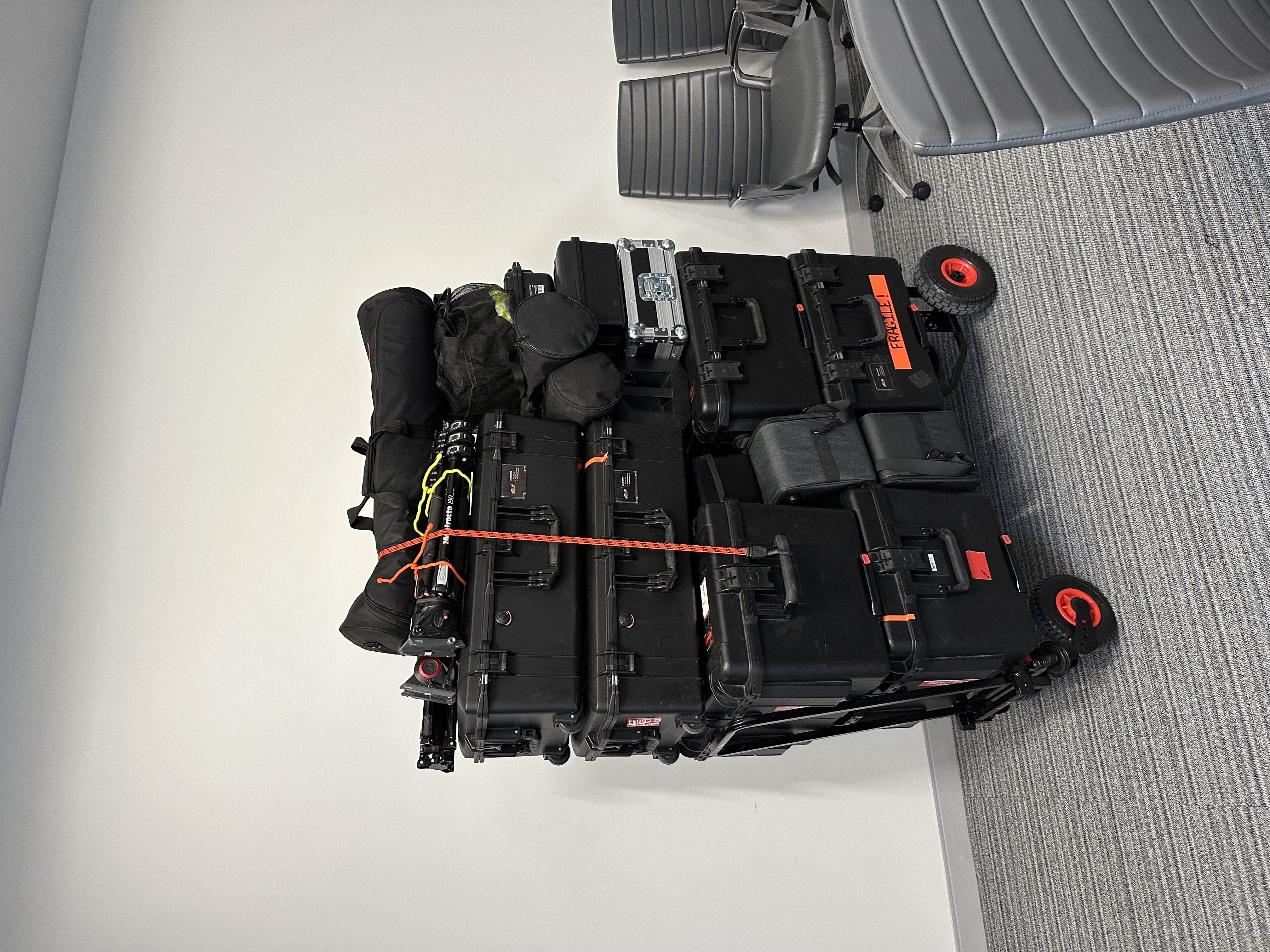
This single question separates professionals from amateurs. Every piece of technology can fail during a live event — the question isn't whether something will go wrong, it's whether the crew is prepared when it does.
I bring redundant equipment to every event: extra cameras, backup cables, a secondary internet connection through bonded cellular. We've had venues where the ethernet port was dead on arrival. Because we had the LiveU Solo Pro bonding 4G and WiFi as a fallback, the stream never missed a beat. The client didn't even know there was an issue until I mentioned it afterward.
Ask your potential hire: what happens if the main camera fails? What if the internet drops mid-broadcast? What if the audio feed has interference? If they don't have immediate, clear answers, keep looking.
Some production companies send subcontractors you've never met or junior crew members while the owner stays home. You want to know exactly who's going to be on site running your event — and whether they've handled events like yours before. For a full rundown of the jobs on a crew, see livestream crew roles explained.
At DFW Live Stream, either I'm there, my lead operator Eli is there, or we're both there. We don't farm out jobs to random freelancers. When you hire us, you get the people who quoted the job, planned the setup, and know your event inside and out. Ask any prospective production company: who specifically will be on site, how many crew members, and what's their experience level?

Audio quality matters more than video quality in a livestream. Viewers will tolerate a slightly imperfect camera angle, but they will not tolerate muffled, echoey, or cutting-out audio — they'll leave within minutes.
A legitimate production company treats audio as a core part of the production, not an afterthought. They should talk about wireless lavalier microphones for presenters, a dedicated audio mixer for balancing levels, and how they handle room acoustics and feedback prevention. We run everything through an Allen and Heath SQ5 mixer and use Sennheiser wireless systems on every event. When we're tying into a venue's existing sound system, we coordinate with their AV team before event day so there are zero surprises during the live broadcast.

Hybrid events — where you have a live in-person audience plus remote viewers watching online — are the standard for corporate conferences and town halls in 2026. But they're significantly more complex than a one-way stream.
A hybrid event means managing the in-room experience and the online experience simultaneously. Remote presenters need to be integrated seamlessly. The online audience needs to feel like participants, not bystanders watching a security camera feed. Q&A might bridge both audiences. Breakout sessions might run in parallel rooms with separate streams. According to recent industry data from AMW Group, 83% of organizers report higher total attendance with hybrid formats compared to in-person-only events, and hybrid events can boost attendee engagement by as much as 80%. That's a real business case for getting the production right.
We've produced hundreds of hybrid events across DFW — from the Society of Classical Learning conference at Gaylord Hotels in Grapevine with over 1,500 attendees, to TSDOS's three-day continuing education event in Frisco with a general session plus three simultaneous breakout rooms. The logistics change with every venue, so you need a team that's done this before and can adapt. If you're specifically planning a hybrid event in the Dallas-Fort Worth area, venue-specific experience matters.

Different events require different platforms, and your production company should be experienced with whatever yours demands. A public product launch might go to YouTube. A confidential investor meeting needs a password-protected viewing page on Vimeo. An internal company town hall might stream directly into Microsoft Teams or Zoom.
We've streamed to Vimeo, YouTube, Facebook, custom RTMP endpoints, Zoom, Teams, and purpose-built viewing pages with analytics and attendance tracking. For a Peterbilt investor meeting at their Dallas corporate office, we built a password-protected private viewing page — the kind of setup where zero technical problems isn't a nice-to-have, it's a requirement. Understanding the difference between public and private streaming options is something your production company should be able to walk you through.
After ten years in this industry, certain warning signs reliably predict a bad experience. Watch for these when evaluating any live streaming company you're considering.
They can't show you examples of past work. Every legitimate production company has clips, case studies, or at least photos from previous events. If they can't demonstrate their work, that tells you something.
They quote without asking questions. If someone gives you a price before understanding your venue, audience size, technical requirements, and run of show, they're guessing. A professional production company needs details to build an accurate quote — and those details shape the crew, equipment, and setup plan for your specific event.
They don't mention backup equipment or redundancy. If "backup" never comes up in the conversation, that's a serious problem. Things go wrong at live events. The only question is whether your team has a plan when they do.
They won't tell you who's showing up. Vague answers like "we'll send a qualified technician" mean they're going to subcontract it to whoever's available that day.
Their price is dramatically lower than everyone else's. Professional equipment, experienced crew, and proper preparation cost money. The live streaming market grew to over $76 billion in 2025 and continues expanding at double-digit rates as organizations invest more in broadcast-quality production. If someone is significantly undercutting the market, they're cutting corners — and you'll discover where during your live event.
These questions will tell you everything you need to know about whether a live streaming company is the right fit for your event. A confident team will answer all of them without hesitation.
What specific equipment will you use for cameras, audio, and streaming? How many crew members will be on site and what are their individual roles? What's your contingency plan if the internet drops or equipment fails mid-broadcast? Have you worked at our venue before, or one with a similar setup? Can we do a site visit or tech rehearsal before event day? What does the setup and testing timeline look like — how early do you arrive? Will we get a recording of the full stream, and in what format? How do you handle remote presenters joining the live broadcast? What platforms can you stream to simultaneously? What's your cancellation and rescheduling policy?
If someone gets cagey or defensive about any of these, that's your answer.
Professional livestream production for a corporate event typically starts around $3,900 and scales up based on complexity — number of cameras, crew size, event duration, travel requirements, and whether you need post-production deliverables like highlight reels or recap videos.
For a deeper breakdown of what drives costs and what different budget levels get you, I wrote a full guide on how much it costs to livestream an event with real pricing ranges from actual projects.
The short version: your event budget — venue, catering, speakers, travel — might be $50,000 or $100,000 or more. The livestream is how your remote audience experiences all of that investment. Cutting corners on the broadcast undermines everything else you've spent. The companies quoting $1,000 for a full-day corporate stream are not bringing the same equipment, redundancy, or expertise as a company quoting $5,000 or more.
Every event is different, so there's no universal number. But if you want to measure the ROI of your livestream investment, start by calculating how many people experienced your event remotely who otherwise wouldn't have attended at all.

We've produced livestreams at venues across the DFW metroplex — Gaylord Hotels in Grapevine, Plano Event Center, Renaissance Hotel in Plano, Texas Trust Credit Union Theatre in Grand Prairie, Omni Las Colinas, corporate offices throughout Dallas, and convention centers in Arlington. We've also traveled nationally for clients who need the same level of production outside Texas, including a multi-day shoot in Washington, D.C., where the client said the broadcast "felt like watching a talk show."
What sets us apart isn't just the gear — it's the approach. We do site visits when possible. We coordinate with venue AV teams. We build detailed run-of-show documents. We show up early, test everything, and have backups ready for the backups. We've been doing this for over a decade, and we've earned nearly 50 five-star Google reviews from clients who come back year after year. That includes a continuing education conference we've produced annually since 2020, a mineral collectors show we've streamed for five consecutive years, and university graduations we've covered every semester for multiple institutions.
If you're looking for a live streaming company in the Dallas area, here's what our corporate livestream services look like — but I'd rather have a real conversation about your event than send you a generic brochure.
Book at least four to six weeks before your event for a standard corporate livestream. For large conferences or multi-day events, eight to twelve weeks gives your production team time for site visits, technical planning, and rehearsals. Q3, Q4, and spring conference season after summer are our busiest periods — during those windows, booking early is especially important.
A freelance videographer typically brings a single camera and handles one role. A livestream production company brings a complete system — multiple cameras, a video switcher, audio mixing, encoding, branded graphics, backup equipment, and dedicated crew members handling separate roles simultaneously. The difference shows up most when something goes wrong: a single freelancer has no fallback, while a production company has redundancy built into every layer.
Yes — integrating remote presenters into a live in-person event is one of the most common requests we get. The production team routes the remote presenter's video and audio feed through the switcher alongside the in-room cameras, so the audience sees a seamless broadcast regardless of where each speaker is located. We handle this regularly for webinar-style events and hybrid conferences.
If your town hall has more than 50 remote viewers and features executive leadership presenting, the answer is almost always yes. A production company transforms a standard Zoom call into a broadcast-quality experience with professional cameras, clean audio, branded graphics, and seamless transitions. The difference between "a meeting that works" and "a production that shines" is having the right expertise behind the scenes.
A legitimate quote should itemize crew (number of operators and their roles), equipment (cameras, audio, switching, encoding), setup and strike time, the streaming platform and configuration, backup equipment and internet redundancy, and any post-production deliverables like recordings or highlight reels. If a quote is just a single line item with no breakdown, ask for specifics before signing.
Track remote attendance, average watch time, audience engagement (chat, Q&A, poll participation), and post-event content reuse. Many organizations find that the livestream doubles or triples their event's total reach. We provide attendance analytics and recording access after every event so clients can quantify the impact.
If you've got an upcoming corporate event, conference, town hall, or any live broadcast, I'd love to hear about it. No pressure — just a conversation about what you need and whether we're the right fit. The best time to start planning is earlier than you think. Reach out, tell me about your event, and let's figure out the right approach together.
Mark runs DFW Live Stream and has been producing corporate livestreams, conferences, town halls and webinars across Dallas–Fort Worth and around the country since 2017. He writes these from the production desk, not a marketing department, and uses AI tools to help draft and structure them. Every post is read, fact-checked and edited by him before it goes live.