A corporate videographer plans and shoots video for businesses — executive interviews, event coverage, training content, brand pieces — and delivers footage your company can actually use. The good ones are equal parts camera operator, audio tech, lighting tech, and calm professional who doesn't rattle your CEO before a take.
Here's the short version of what to look for: real corporate experience (not a wedding reel), audio-first thinking, a written process, business basics like insurance, and deliverables spelled out before anyone hits record. Miss on two of those and you'll feel it in the final cut.
I own DFW Live Stream, and corporate video is half of what we do — so I've also been on the hiring side, bringing on operators for larger shoots. This is the checklist I'd hand a marketing manager or comms lead hiring a videographer for the first time.
The job is bigger than operating a camera. A corporate videographer owns the whole capture: picture, sound, light, and the plan that gets all three right in a conference room that was never designed for any of them.
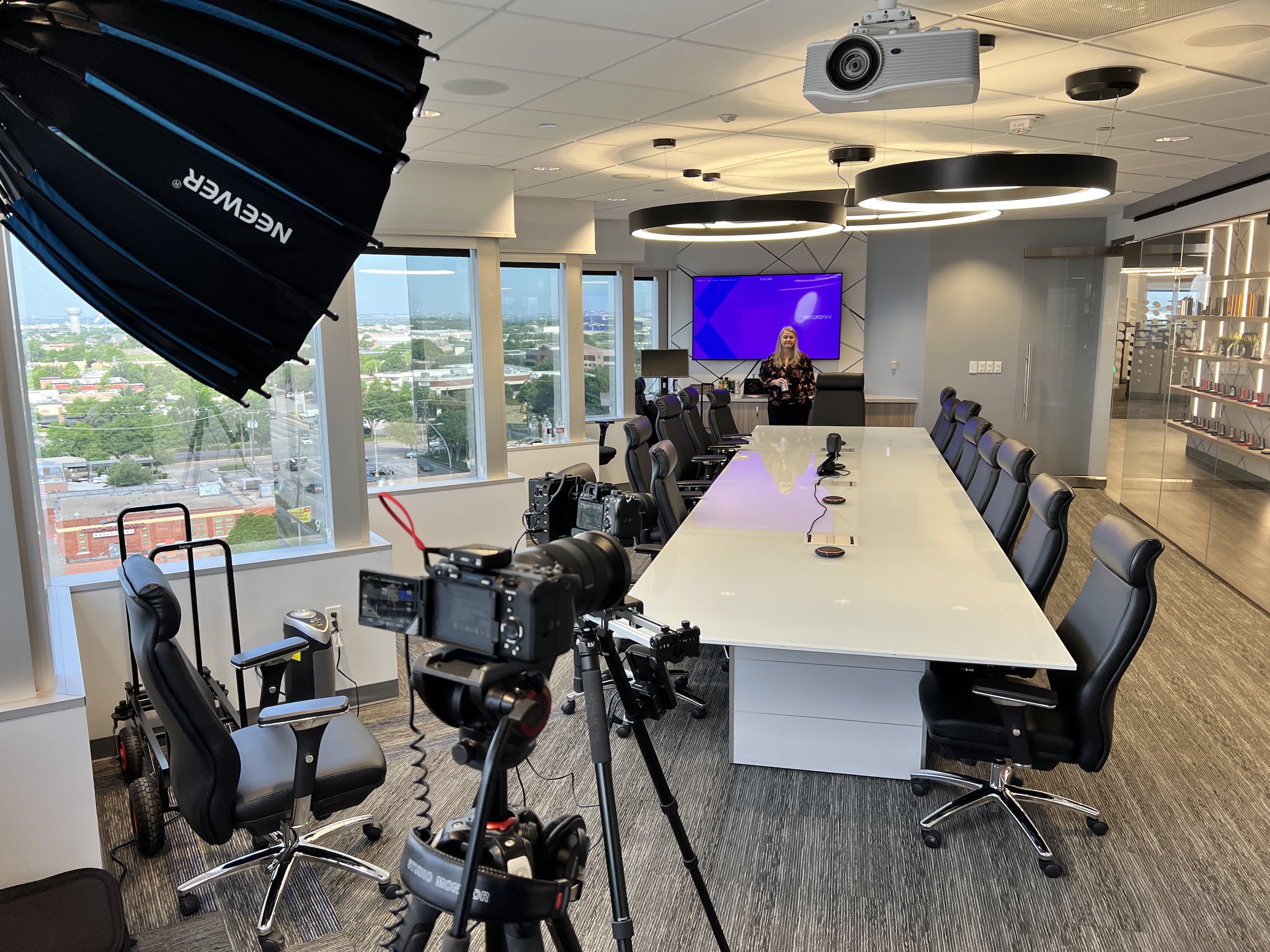
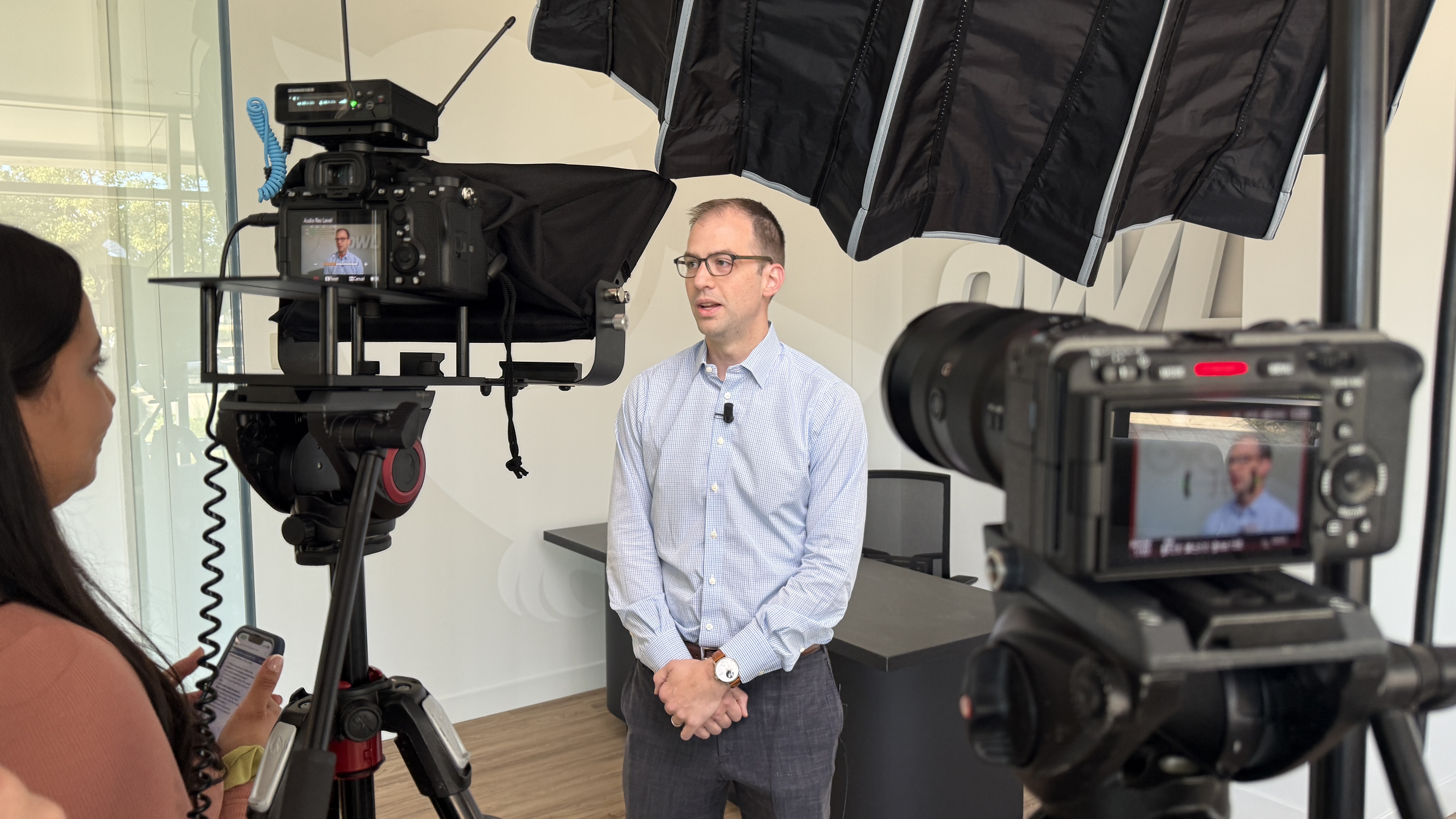
On a typical engagement that means scouting or asking hard questions about the location, building a shot list from your goals, lighting the space, mic'ing your people with wireless lavs, shooting the interviews or event, and delivering edited video or organized footage — whichever you agreed on.
The best ones also direct. Most executives aren't on-camera naturals, and a videographer who can relax a nervous VP and coach a cleaner sound bite is worth more than any lens they own.
This is a scale question, and it's the first one to answer — it changes your budget and your shortlist. One camera and controlled conditions favor a solo videographer; live audiences and multiple cameras favor a crew.
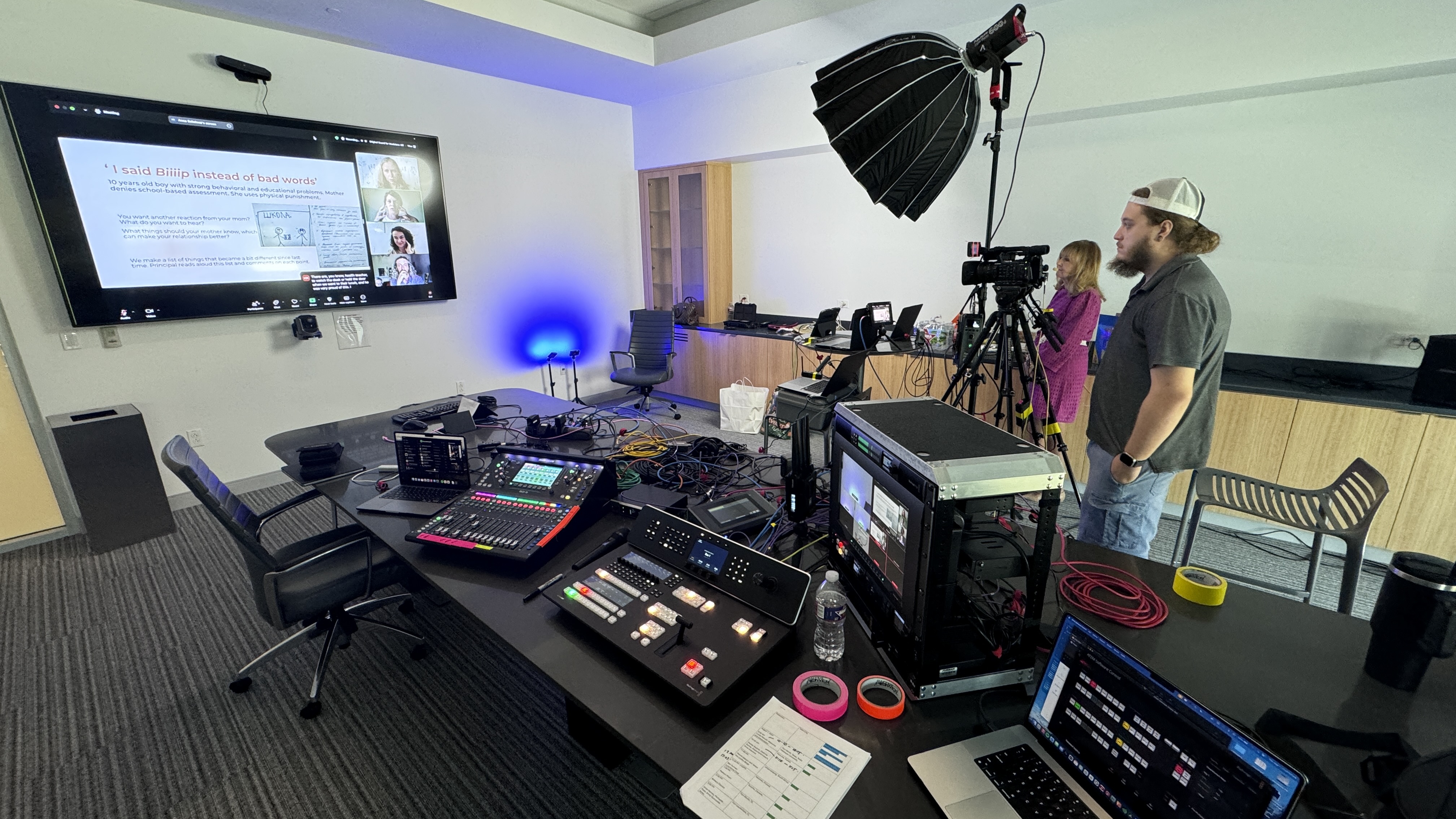
A solo corporate videographer is the right call for interviews, testimonials, small event recaps, and social content. It's the wrong call for a live conference, a switched multi-camera show, or anything with an audience watching in real time — one person physically can't run four cameras, a switcher, and an audio board at once.
I wrote up the four questions that expose which side you're on in production company vs. freelance videographer. If your project is bigger than one camera, start there.
A gorgeous wedding reel tells you almost nothing about how someone performs in a boardroom. Corporate shoots have their own physics: compressed schedules, non-performers on camera, brand standards, and stakeholders who need approvals.
Weddings reward a run-and-gun shooter who never interrupts the day. Corporate work rewards someone who takes control of the room politely — resets the lighting, moves the plant out of the frame, asks the AC to be cut for audio, and gets the interview in the forty-five minutes the exec's calendar allows.
So when you review portfolios, look for work that resembles your project: executive interviews, event coverage, training modules. And ask what their role was on each piece — "I shot and edited this" and "I was one of six people on this" are very different claims.
Every good corporate videographer I've hired or worked alongside checks the same five boxes. None of them are about owning the newest camera.
Corporate portfolio. Work shot in offices, ballrooms, and warehouses — environments like yours, with results you'd put your logo on.
Audio-first thinking. Ask how they'd mic a two-person interview. You want to hear wireless lavs, a backup recording, and monitoring on headphones — we run Sennheiser wireless for exactly this. If they lead with the camera and shrug at sound, keep looking. Bad audio is the number one thing that makes corporate video feel cheap, which I covered in getting your audio right.
A written process. Discovery, shot list, schedule, delivery timeline. Professionals send these without being asked.
Business basics. Liability insurance (many venues require a COI), a real invoice, a W-9. Boring, and non-negotiable.
Deliverables in writing. Formats, lengths, revision rounds, raw-footage ownership, and dates. Every dispute I've ever heard about traces back to this paragraph being missing.
Five minutes of good questions saves you from most bad hires. The answers matter less than whether the answers are specific.
Ask: What similar projects have you shot, and what was your role? How do you handle audio in a echo-prone conference room? What happens if a camera or mic fails on site? What do you need from us before shoot day? When do we see footage, and what does a revision round look like?
A pro answers all five in concrete terms, usually with a story attached. Vague answers on process and backup gear predict exactly the problems you'd expect.
Most video horror stories announce themselves early. These are the signals I'd treat as disqualifying.
No corporate work in the portfolio — only weddings, music videos, or personal projects. No insurance. A quote dramatically below everyone else's, which usually means no backup gear, no editing time, or no experience pricing real scope. Vague or absent contracts. And slow, sloppy communication before you've paid — it never improves after.
One more subtle one: a videographer who never asks about your goals. If every question is about gear and none are about what the video needs to accomplish, you're hiring a camera, not a partner.
Professional corporate video is priced on crew, gear, and time — a day of shooting plus the editing behind it. Rock-bottom quotes cut exactly the things you can't see until delivery.
As a general guide, a professionally crewed single-camera shoot typically starts around $3,900, and multi-camera productions — panel coverage, events with live switching, or anything headed for a livestream — generally run $5,000 to $15,000. Editing scope, motion graphics, and shoot length move the number inside those ranges. For local context, here's my guide to corporate video production in Dallas and finding a Dallas corporate videographer.
If a quote comes in at a fraction of these numbers, ask what's missing. Sometimes the answer is legitimate — smaller scope, no editing — and sometimes the answer is your audio.
A well-run corporate video project follows the same arc every time: discovery, planning, shoot, edit, delivery. If your candidate can't describe that arc unprompted, that's your answer.
Expect a discovery call about goals and audience, a shot list and schedule in writing, a confirmation of location details and who's on camera, the shoot itself — typically a half or full day — then a first cut, one or two revision rounds, and final files in the formats you'll actually use. If the footage is destined for social, say so up front; vertical crops are a planning decision, not an afterthought, and I shared more on that in corporate video for social media.
If you're planning a video project and want a second opinion on scope — whether it needs one camera or four, or whether it needs a videographer at all — grab 20 minutes with me. I'll give you a straight read on what your project actually requires.
They plan and shoot video content for businesses — interviews, events, training, and brand pieces — handling camera, lighting, and audio, then delivering edited video or organized footage. The role covers far more than operating a camera.
Professionally crewed single-camera shoots typically start around $3,900, with multi-camera or livestreamed productions generally running $5,000 to $15,000. Editing scope and shoot length are the biggest variables inside those ranges.
A videographer is usually one person with a camera kit — right for interviews and simple shoots. A production company brings a crew, multiple cameras, live switching, and redundancy — right for live events and complex productions. Scale decides.
Talented shooters can cross over, but the environments differ enough that I'd want to see corporate work in their portfolio first. Boardroom audio, brand standards, and executive schedules are learned skills, and your project shouldn't be the classroom.
Scope, shoot dates and hours, deliverables with formats and lengths, revision rounds, delivery timeline, raw-footage ownership, payment terms, and proof of insurance. If any of those are missing, ask before you sign.
Two to four weeks for a standard interview or small shoot, longer during spring and fall event seasons. Complex or multi-day projects deserve six weeks or more so planning isn't compressed.
Some do, but livestreaming is a different discipline with different gear — switchers, encoders, redundant internet. If your event streams live, ask specifically about that experience or bring in a livestream production team alongside your videographer.