Here's the short version: a standard produced webinar takes about two to three weeks from kickoff to show day. A virtual town hall or executive broadcast with multiple remote presenters usually wants three to four. A multi-session virtual conference with breakouts needs six to eight weeks, sometimes more. None of that time goes to gear — it goes to planning, people, and rehearsal, which is exactly where virtual events are won or lost. (Updated September 7, 2026.)
I get asked this question in almost every first call, usually phrased as "is there still time?" So let's walk through what actually happens between the day you book and the moment you go live — and where the time really goes.
This is the timeline piece. For what the production itself involves, start with virtual conference production for multi-session events, or virtual event production services for the full menu and pricing.
Different virtual events need different runways, and the difference is almost entirely about how many people and sessions have to be coordinated. Here's how I break it down when someone brings me a date.
A single produced webinar — one session, up to a handful of presenters — comfortably runs two to three weeks from kickoff to live. A virtual town hall or all-hands tends to want three to four weeks because executive calendars are harder to pin down for rehearsal than the production itself is to build. A multi-session virtual conference with breakouts, session chains, and a dozen or more presenters is a six-to-eight-week project. And if your program is part of a recurring series, everything after the first one gets faster, because the show package and workflow already exist.
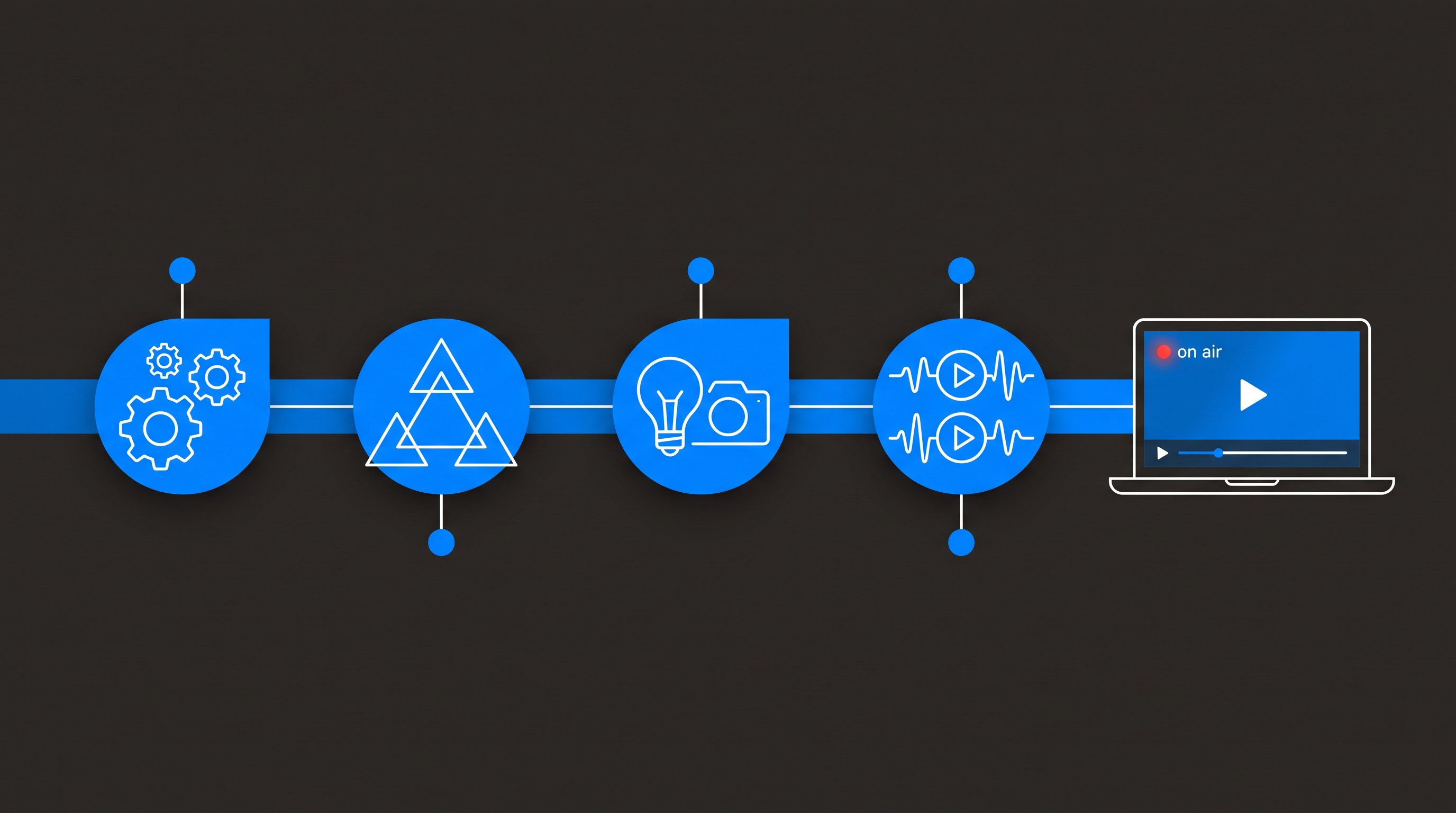
The production timeline for a produced webinar follows the same arc every time. Knowing the sequence helps you see why skipping steps shows up on screen.
Kickoff and planning. We start with a production planning session: goals, audience, platform, run of show, who's presenting and from where. This one meeting sets up everything else, and it's where most timeline risk gets removed.
Show package build. Branded graphics, lower thirds, holding screens, and transitions get designed and approved. This runs in parallel with planning and typically takes the first week.
Presenter readiness. Each presenter gets prepped — camera framing, lighting, audio, and how the show will flow around them. This is the step that separates a produced webinar from a screen-share with slides, and it's the step people most often try to skip.
Tech check and rehearsal. In the final days before the event we run a pre-show technical check with every presenter on the actual platform, with the actual graphics. If something's going to break, I want it to break here.
Show day and delivery. The event runs, and the full program recording is delivered afterward, along with any edited highlight clips you've added on. Delivery timing gets agreed in planning so there are no surprises.
The production rig for a virtual event can be built and tested in a day — that has never been the constraint. The constraint is coordinating humans: your presenters, your stakeholders who approve graphics, and the calendar slot where everyone can rehearse together.
That's also why a dedicated producer changes the math. A webinar producer spends those weeks chasing the details you don't have time for: confirming presenter tech, tightening the run of show, and making sure the platform is configured before anyone logs on. When people say a virtual event "came together fast," there was usually a producer making that true.
A few things reliably add time, and it's better to know them up front than to discover them ten days out. If your event has any of these, add runway.
More presenters means more prep sessions and a harder rehearsal to schedule — this is the single biggest stretcher. Multiple sessions or breakout tracks multiply the run-of-show work. Platform constraints matter too: some corporate platforms need specific configuration or licensing confirmed well before show day, which is a conversation to have in week one, not the day before. And custom graphics that need several rounds of stakeholder approval can quietly eat a week on their own. Audience promotion runs on your side, but it also points the same direction — invites tend to go out a couple of weeks ahead, so the program needs to be locked before then.
Usually, yes — for a single webinar with cooperative presenters, two weeks is tight but workable. What compresses is the number of approval rounds and the padding between steps, not the steps themselves.
What I won't compress is the rehearsal. If the schedule only allows one thing before show day, it's a full technical check with every presenter on the real platform. If your date is inside two weeks, call anyway — worst case, I'll tell you honestly what's achievable and what to simplify.
A multi-session virtual conference is really a chain of produced events sharing one brand and one backbone, and the timeline reflects that. Six to eight weeks is the honest starting point.
The extra time goes to session-by-session run of shows, speaker wrangling at scale, and building transitions so the day feels like one continuous broadcast instead of a stack of disconnected meetings. If you're weighing this format, the virtual conference production breakdown covers what changes at multi-session scale.
These are two different clocks, and mixing them up causes most of the panic calls I get. The production timeline is how long the work takes once we start; booking lead time is about securing the date at all.
Production dates fill up, especially in Q3, Q4, and spring conference season — so booking four to six weeks out is the comfortable zone even when the production itself only needs three. If you want the full picture on securing a date, I've covered how far in advance to book separately.
Timeline and price are related but not the same — a rushed event doesn't cost less, it just carries more risk. Our webinar pricing is published, which makes planning easier.
A single produced webinar is $1,595 for programs up to 90 minutes, including the planning session, presenter prep, branded show package, pre-show technical check, and full program recording. Monthly programs run $1,095/month, a twice-monthly series is $1,995/month, and edited highlight clips are a $295 add-on. Programs over 90 minutes and multi-track events are quoted based on scope. The full breakdown — and what each tier includes — lives on our webinar production page, and the wider service scope is covered under virtual event production services.
If you've got a date on the calendar and you're wondering whether there's enough runway, the fastest way to find out is to ask. Grab 20 minutes with me and we'll map your event against a real timeline — no pressure, no pitch, just an honest read on what's achievable.
A single produced webinar takes about two to three weeks from kickoff to show day. Virtual town halls generally want three to four weeks, and multi-session virtual conferences need six to eight weeks or more. The time goes to planning, presenter prep, and rehearsal — not equipment.
Usually, yes. Two weeks is tight but workable for a single session with responsive presenters. The step I won't cut is the pre-show technical check — every presenter, on the real platform, before show day.
Kickoff and planning first, then the branded show package gets built, presenters get prepped individually, and everything comes together in a full technical rehearsal in the final days. Show day is the visible part; the weeks before it are why it looks effortless.
Individual prep happens through the middle of the timeline, and the full technical check lands in the last few days before the event. That final check happens on the actual platform with the actual graphics, so nothing on show day is a first attempt.
It can. Some corporate platforms need specific licensing or configuration confirmed early, so we sort platform questions in the kickoff meeting. Confirming the platform in week one keeps it from becoming a week-before surprise.
Plan on six to eight weeks minimum. Multiple sessions mean multiple run of shows, more presenters to prep, and transitions that make the day feel like one broadcast. Recurring conferences get faster after the first one.
No — and it's worth separating them. Production is the work once we start; booking is securing the date at all. Dates fill up in busy seasons, so booking four to six weeks out is comfortable even when the production needs less.
A single produced webinar is $1,595 for up to 90 minutes, including planning, presenter prep, branded graphics, rehearsal, and the program recording. Monthly programs are $1,095/month and a twice-monthly series is $1,995/month. Longer or multi-track programs are quoted by scope.