If you're looking into live webcasting services, here's the short version: a live webcast is a produced, one-to-many broadcast of your meeting, delivered to a private audience wherever they are. Real cameras, clean audio, someone actually directing the thing. It is not a video call with more people crammed into it. And the "services" part covers everything between "we have a meeting next month" and "everyone watched it without a hitch" — planning, production, secure delivery, and a clean recording afterward.
I produce these for companies in Dallas-Fort Worth and well beyond it, and most of what I webcast isn't a once-a-year spectacle. It's the meetings that happen every month or every quarter: town halls, leadership updates, company-wide briefings. This post covers what live webcasting services include for exactly those meetings, what they cost, and what to ask before you hire anyone. If you want the wider category — one-time events, investor broadcasts, the whole lane — that lives in my guide to webcast production services. This one stays on live meetings.
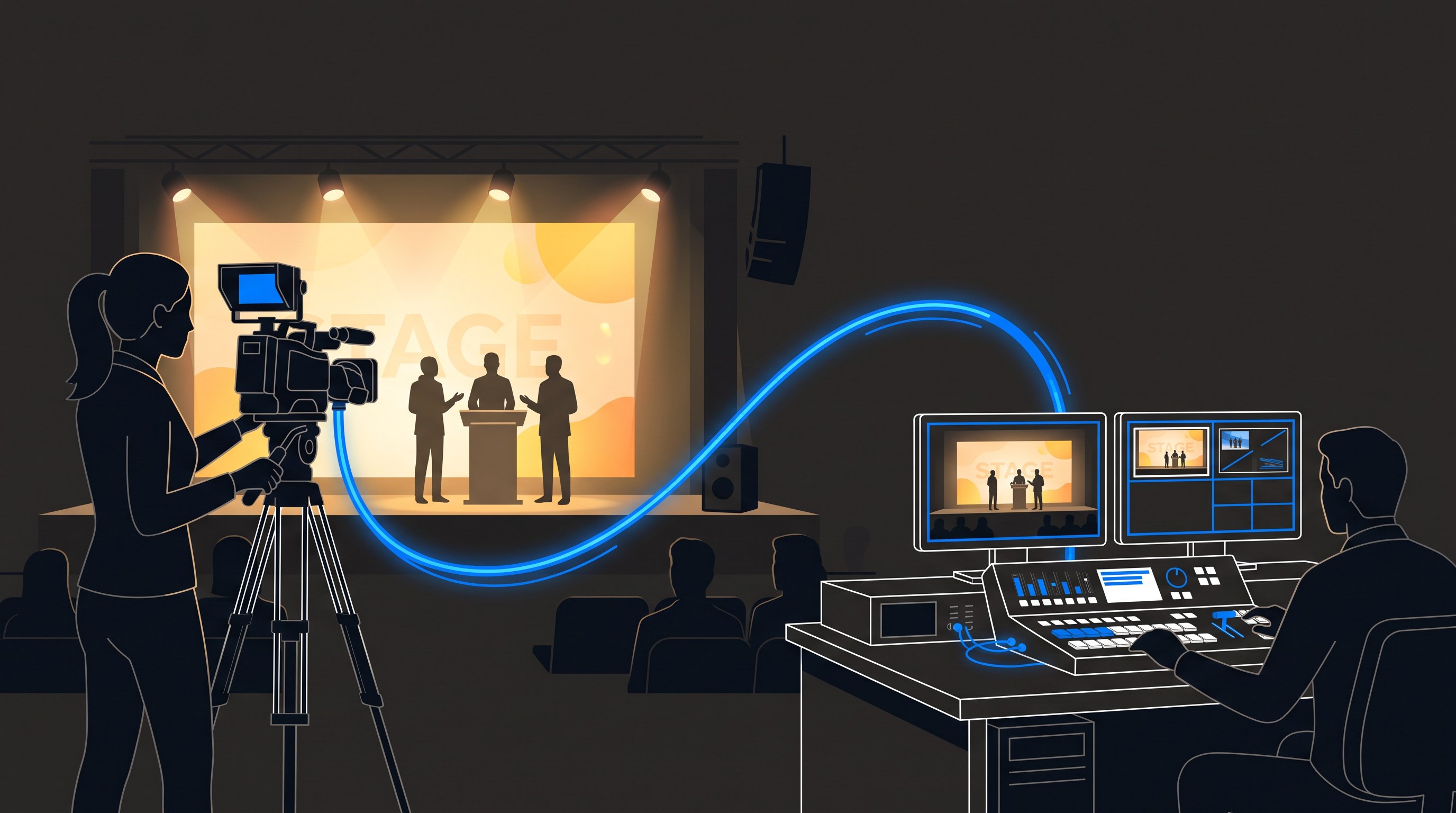
A live webcasting service handles the production and the delivery: cameras, audio, switching, encoding, the viewing platform, and the people running all of it. You bring the meeting and the message; the service makes sure it reaches every viewer looking and sounding like leadership meant it.
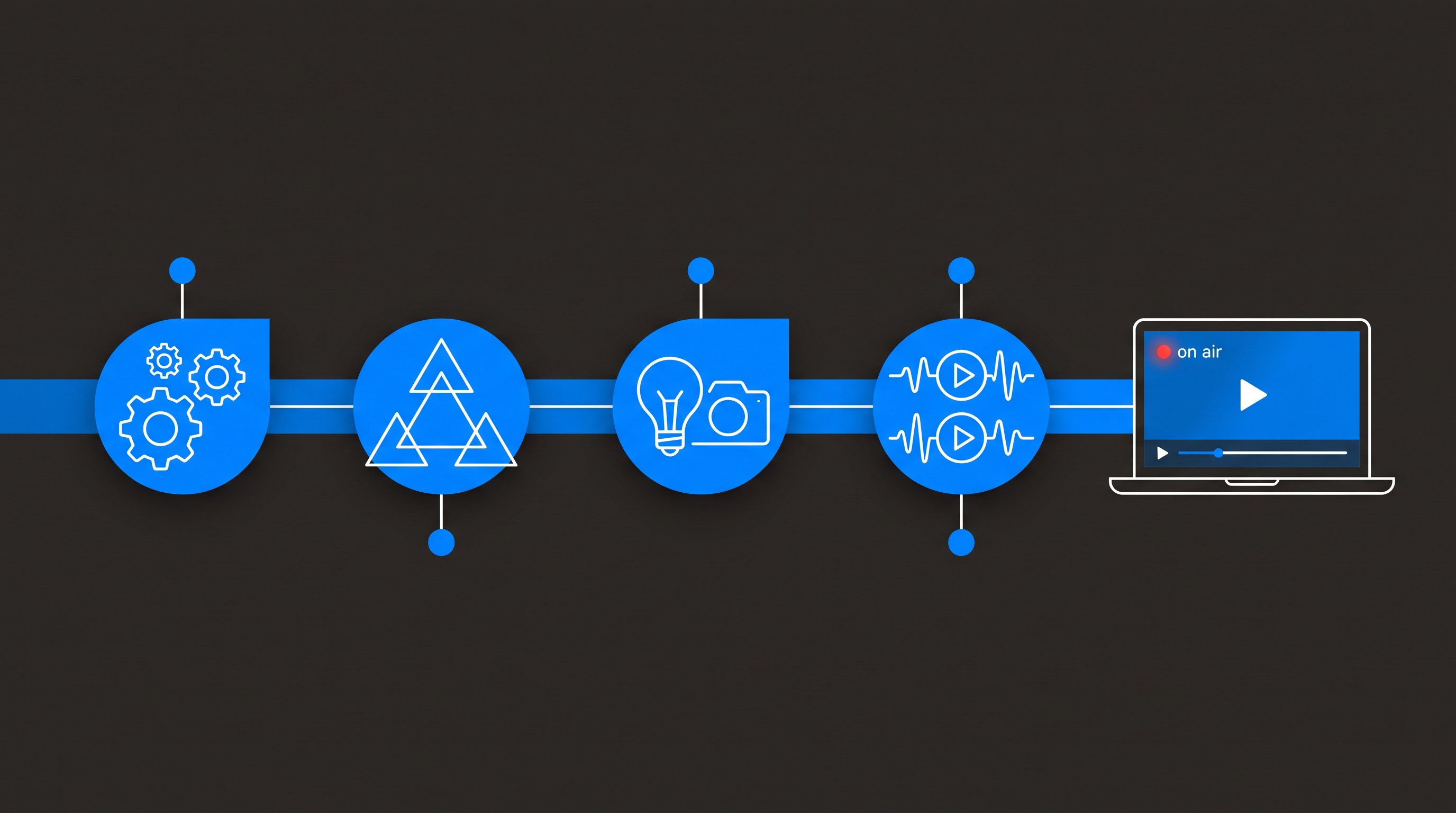
In practice that breaks into three phases. Before the meeting, we build a run of show, test every presenter's connection or mic, and set up the viewing page so the right people — and only the right people — can get in. On the day, a producer runs the broadcast: switching between speakers and slides, keeping levels clean, watching stream health the entire time. Afterward, you get a proper recording, delivered however your team needs it. If a vendor is only quoting you the middle part, you're not getting a webcasting service. You're getting a camera operator.
A webcast is a broadcast: one presentation going out to many viewers, produced like a TV program. A webinar is usually a smaller, registration-driven session built around interaction, and a video call is a conversation where everyone's a participant.
The words get used interchangeably and it genuinely muddies quotes, because vendors price these very differently. I wrote a full breakdown of webcast vs. webinar vs. livestream if you want the vocabulary sorted before you request pricing. The short test: if your CEO is presenting to five hundred employees and you'd be horrified if a random attendee unmuted, you want a webcast.
There are two shapes, and the right one depends on where your presenters are. Either we broadcast from your room, or we produce the whole thing remotely — and both should come out looking like a broadcast, not a screen share.
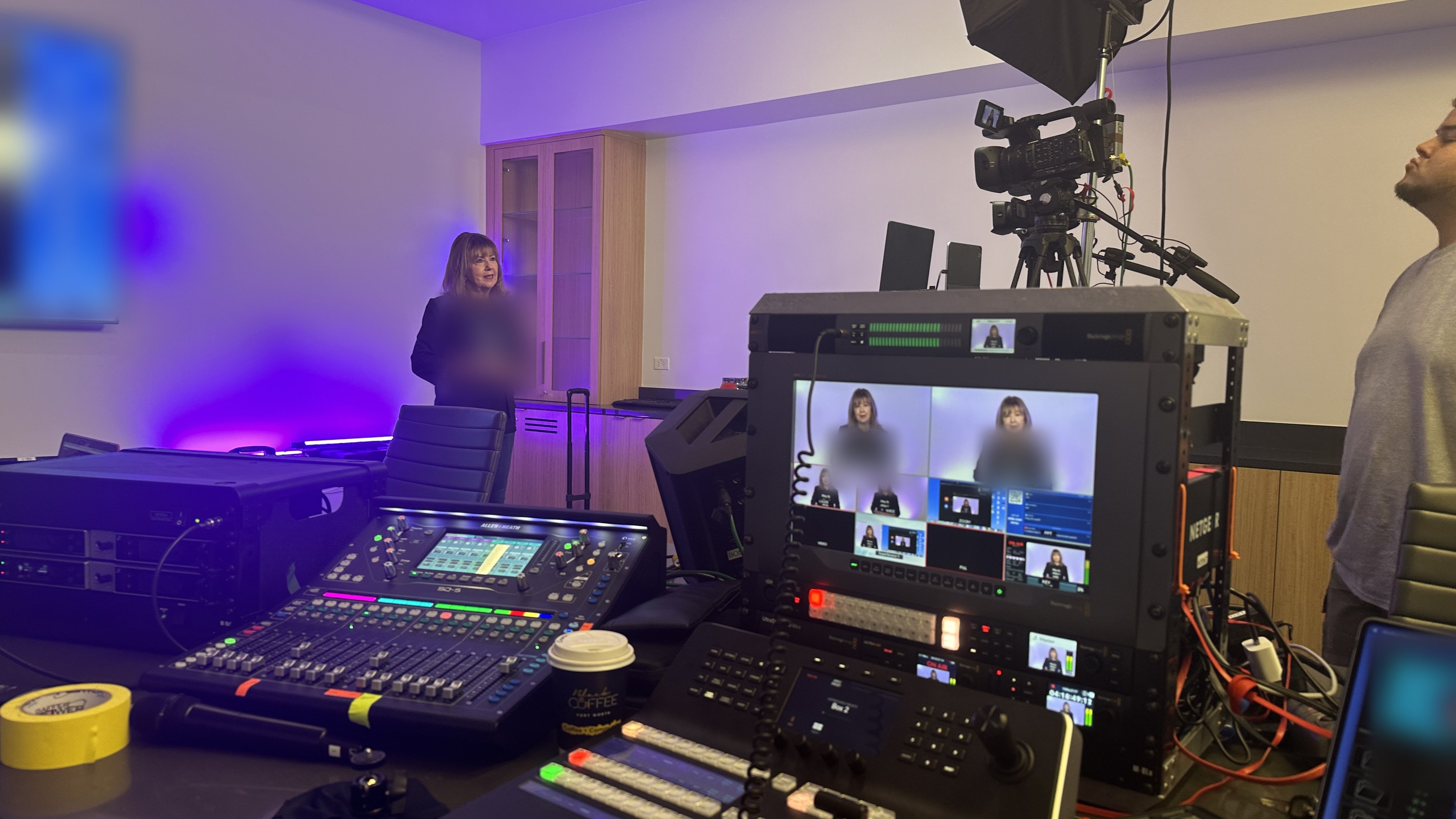
When leadership presents from a boardroom, office, or venue, my team comes to you. Broadcast PTZ cameras — I run Canon CR-N500s — get clean angles without turning your meeting room into a film set, presenters go on proper Sennheiser mics mixed through an Allen & Heath SQ5, and everything cuts together through a Blackmagic ATEM switcher: speaker, slides, lower thirds, a branded look that matches your company. When presenters are scattered, we flip it around and produce from the control room instead — each remote presenter gets a tech check, and the audience sees a clean, switched program rather than a grid of webcams. If your meeting is really a company-wide town hall from a physical room, I've written separately about town hall live streaming.
Nobody remembers a smooth webcast, and that's the point. What they remember is the quarterly briefing that froze while the CFO was mid-sentence — and internal audiences talk.
So I build these to not fail. The stream rides a bonded encoder, a LiveU Solo Pro, pulling from your network and cellular at the same time, so one connection stumbling never becomes visible. A local recording runs independently of the stream, power is backed up, and a producer is watching the broadcast the entire time rather than finding out about a problem when the chat lights up. Most webcast horror stories trace back to a single point of failure someone hoped would hold. I broke down the common ones in why corporate livestreams fail.
A monthly or quarterly webcast program beats a string of one-off productions on every axis: cost, quality, and how much of your team's time it burns. By the third session, your presenters know the drill, the setup is dialed, and the whole thing runs on rails.
This is honestly my favorite kind of engagement, because the quality compounds. The first town hall involves figuring out presenters, platform, and flow. After that, it's a rhythm — same crew, same look, no reinventing anything. It's also why I price recurring programs differently instead of quoting each meeting like it's never happened before. If your meetings lean webinar-shaped — registration, external audiences, marketing goals — my produced webinar packages page lays out how I handle those as a monthly program too.
Honest ranges, so you're not guessing: a single fully-produced remote webcast starts around $1,595. Recurring monthly programs generally run $1,095 to $1,995 per month depending on cadence and production level, and extended sessions — think half-day leadership summits — are quoted based on duration, presenter count and production complexity.
If we're producing in person from your boardroom or venue with cameras and crew, that starts around $3,900. Add a live in-room audience plus a remote one and you're in hybrid territory, which typically lands between $5,000 and $15,000 depending on rooms, cameras, and complexity. Every event gets priced individually because scope moves the number more than anything else — here's how the pieces add up if you want the full math.
A few questions separate real webcasting services from someone with a camera and a Vimeo account. Ask them, and pay attention to how fast the answers come.
Who is actually producing my meeting, and are they watching the stream the whole time? What's the redundancy plan if the internet drops? Where does the stream live, and how do you keep people who weren't invited from watching? What do we get afterward, and how fast? And what happens when a presenter's slides won't advance mid-meeting — because someday they won't. A good vendor has lived every one of those answers. Here's what to expect when you hire a livestream company if you want the full picture of how this should feel.
If a recurring town hall, leadership update, or quarterly briefing is on your plate and you'd rather it just work, grab 20 minutes with me. No pressure, no pitch — tell me about the meeting and I'll give you a straight answer on approach and cost.
A live webcast is a produced broadcast of a presentation or meeting sent to many viewers at once, usually on a private viewing page. Unlike a video call, the audience watches a switched, directed program — cameras, slides, graphics — rather than participating in a meeting grid.
A webcast is broadcast-first: one-to-many, produced, minimal audience participation. A webinar is built around interaction — registration, Q&A, polls — and usually serves marketing or training goals. The production overlaps, which is why the terms blur, but the audience experience is different and so is the pricing.
Yes. Most corporate meeting webcasts I run include moderated Q&A, and sometimes live polls. The difference is that interaction flows through a moderator instead of everyone having an open mic, which keeps a 500-person meeting from sounding like one.
The stream lives on a gated player, not a public link. Depending on your needs that's a password, a registration list, or SSO so employees authenticate with their company login. Nobody outside the approved audience can reach it, and you can see who attended.
A single produced remote webcast starts around $1,595, and recurring monthly programs generally run $1,095 to $1,995 per month. In-person production from your office or venue starts around $3,900, and hybrid setups with an in-room audience typically run $5,000 to $15,000.
Always. I capture a high-quality local recording independent of the stream itself, so your archive isn't a compressed copy of whatever the internet delivered that day. It's delivered however your team needs it — private replay link, gated page, or the raw file.
Yes — that's a big part of what I do. My team brings cameras, audio, and encoding to your boardroom or conference space and broadcasts from there. I'm based in Dallas-Fort Worth and travel when it makes sense.
For a first webcast, two to three weeks is comfortable — enough to plan the run of show, test presenters, and set up secure viewing. Once a recurring program is up and running, each session needs very little from your side beyond showing up and presenting.