At some point, every company that runs webinars asks the same question: should we keep doing this ourselves, or hand it to a production company? I hear it from marketing managers who are tired of being the unofficial AV department, and from teams who just had a webinar go sideways in front of a client audience.
Here's the short answer. If webinars are a frequent, low-stakes part of your routine, building in-house capability usually wins. If they're high-stakes, customer-facing, or hybrid, outsourcing almost always costs less than it looks like on paper, because you're comparing a per-event fee against a salary, gear, and your team's time. And a lot of companies do best with a third option nobody talks about: outsource the big ones, get trained up for the small ones. I'll walk through all three.
One thing this post is not: a "professional vs. DIY" argument. I covered whether you need professional production at all in my live stream company vs. DIY comparison. This is a different question. You've already decided your webinars should look good. The question is whose payroll the people making that happen are on.
The honest framing of in-house vs. outsourced webinar production is a fixed cost against a variable one. In-house means salary, equipment, and software you pay for whether you run two webinars or twenty. Outsourcing means paying per event, for exactly the scope each event needs.
Webinars are worth getting right, which is why this decision matters. 73% of B2B marketers say webinars produce the best high-quality leads of any channel they run. That's a real revenue function, not a nice-to-have. So treat the production question like any other staffing decision: what does each path actually cost, and what do you get for it?
An in-house webinar operation has three costs, and most companies only budget for one of them. The visible cost is a person. The hidden costs are the gear and everyone else's time.
Start with the person. A dedicated video producer in the US runs about $81,000 a year on average per Glassdoor, more in a market like Dallas once you add benefits. If you don't hire someone dedicated, the work lands on a marketing coordinator who now spends two days per webinar on platform setup, slides, rehearsals, tech checks, and editing the recording afterward. That time was budgeted for something else.
Then the gear. A webinar that looks professional needs decent cameras, real microphones, lighting, a switcher, and software that can handle graphics and remote guests. You can assemble a solid in-house kit for a few thousand dollars, but somebody has to choose it, learn it, maintain it, and troubleshoot it at 8:55 a.m. when the webinar starts at 9:00. In my experience, the gear is never the problem. The person responsible for the gear being ready is the problem.
And the part nobody budgets: failure risk. When an internal webinar hiccups, you apologize in the chat and move on. When a product launch webinar for 400 registrants drops audio for ten minutes, that's a different conversation. If you've read my breakdown of what it costs to livestream an event, you know I always come back to the same point: you're not paying for the gear, you're paying for the event not failing.
Outsourcing a webinar means a production team shows up with broadcast equipment, runs the show, and hands you a finished recording, for a per-event fee. You trade a standing overhead cost for a scalable one, and you inherit the vendor's redundancy instead of building your own.
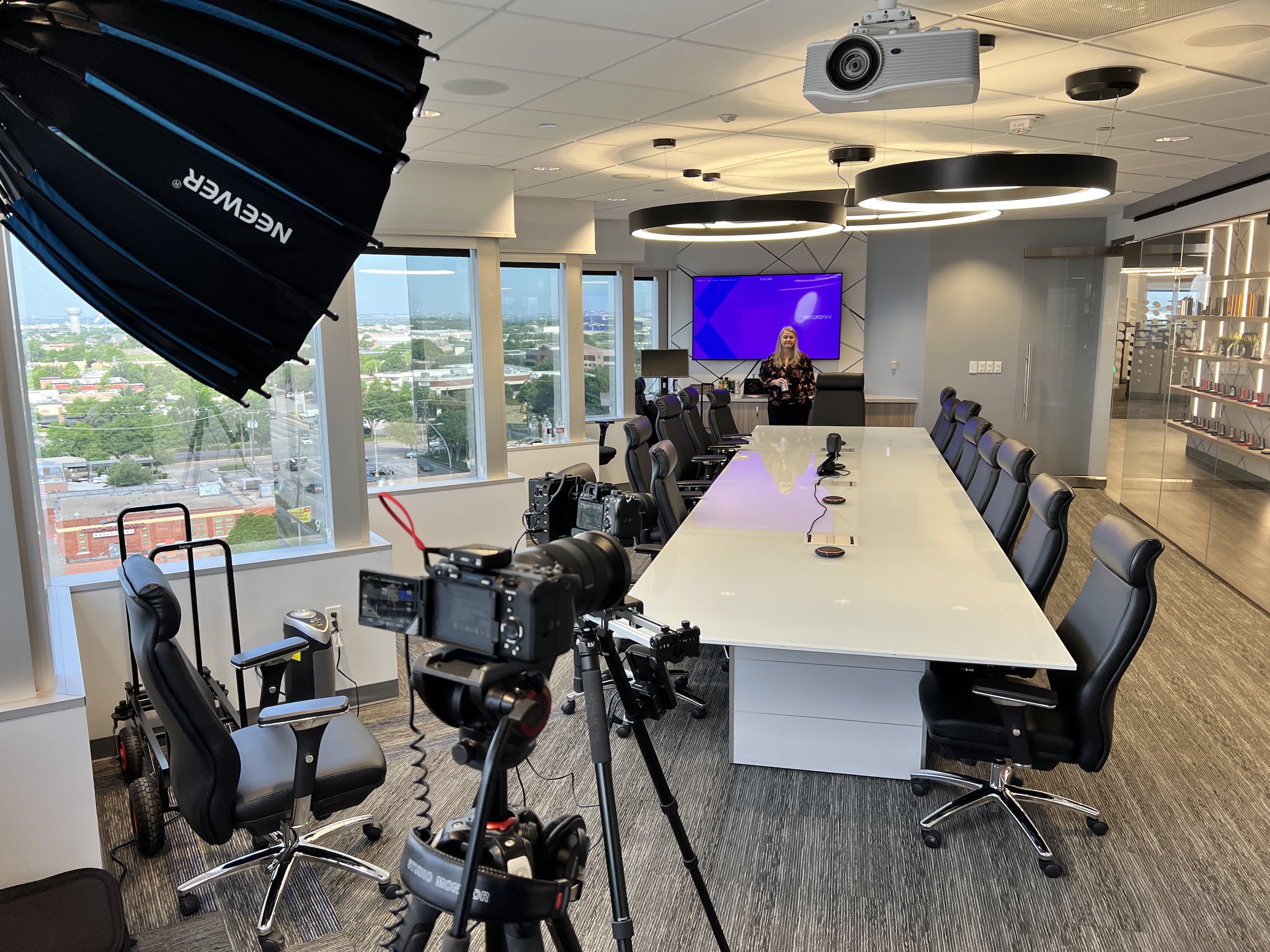
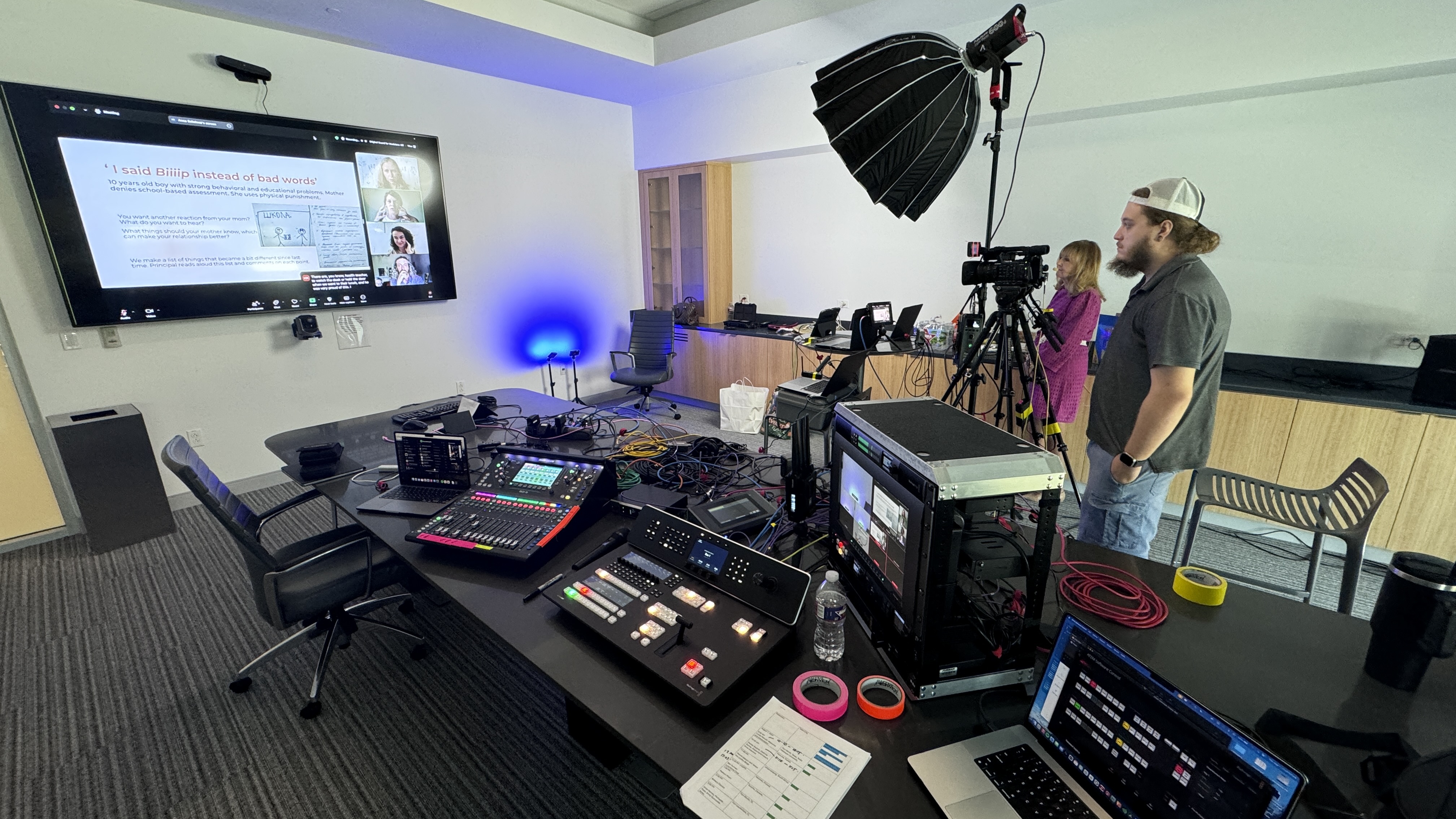
When we produce a webinar, we're bringing the same setup we use for corporate events: real cameras into a Blackmagic ATEM switcher, Sennheiser wireless mics, branded graphics and lower thirds, and a bonded LiveU encoder so the stream stays up even if the building internet doesn't. Your presenters get a producer who handles rehearsals and cues, and your team gets to actually participate in the webinar instead of running it.
Cost-wise, every event is different, but fully virtual webinar production generally starts around $1,595, with hybrid formats and multi-session events running higher. Compare that against the loaded cost of a hire plus equipment, and the math is simple: outsourcing wins until your webinar volume gets high enough that a dedicated person pays for themselves. If you want to see what the engagement actually looks like step by step, I wrote up what to expect when you hire a livestream company. Full produced-webinar pricing is published at dfwlivestream.com/webinars — the price on the card is the price.
In-house wins when webinars are frequent, simple in format, and internal in audience. If your team runs a weekly training session or a recurring product Q&A on Zoom, hiring a vendor for each one would be overkill, and the repetition means your team gets good fast.
The pattern I see with companies that do in-house well: one named owner (not "whoever's free"), a standardized setup they don't rebuild every time, and a format simple enough that one person can run it. A single presenter with slides and a clean audio chain is very achievable internally. If most of your webinars are employee-facing, my guide to internal communications video covers how to make that kind of content work without overproducing it.
Outsourcing wins when the stakes rise faster than the frequency. Customer-facing launches, executive town halls, paid or ticketed sessions, and anything hybrid are the formats where a production partner earns the fee.
Hybrid is the big one. The moment you have an in-room audience plus remote attendees plus a remote presenter or two, you've left webinar territory and entered event production, and the complexity jumps more than most teams expect. I've watched capable internal teams get buried trying to mix room audio and stream audio at the same time. It's not a talent problem, it's a hands problem. I break down why in my hybrid event production guide.
The other trigger is executive visibility. When the CEO is presenting to investors or the whole company, "we'll figure it out" stops being an acceptable production plan. Those are the events where someone whose entire job is watching stream health, audio levels, and camera cuts is worth every dollar. If your big events live on Zoom specifically, my Zoom town hall strategies post pairs well with this one.
The setup that works best for a lot of companies is a split: a production partner for the handful of high-stakes webinars a year, and a trained internal team for everything recurring. You get broadcast quality where it matters and keep the routine stuff cheap.
This is a real engagement type, not a theory. A Dallas logistics company brought me in not to run their webinars, but to teach their team to run them better. We redesigned their studio, showed them how to integrate Zoom participants directly into their live stream, and built a setup their own people could operate confidently. They didn't need me on every event after that, and that was the point. A good vendor should be willing to make themselves unnecessary for the small stuff, because the big stuff is where they actually add value.
If you go this route, ask a prospective partner two questions. Will you document the setup so we own it? And will you train our people on it? If they dodge either one, they're protecting a recurring invoice, not your webinars.
Strip everything above down and the decision comes down to three questions. They take about five minutes and they'll get you further than any feature comparison.
First: what happens if this webinar fails? If the honest answer is "we'd be embarrassed internally," in-house is fine. If it's "we'd lose pipeline, credibility, or a client," that's an outsource event. Second: how often do we run the same format? High repetition favors in-house, because the learning curve pays off. A mixed bag of formats favors a partner who's seen them all. Third: whose time are we actually spending? Count the real hours your team puts into each webinar and price them honestly. That number surprises almost everyone who calculates it, and it should feed directly into how you measure your live streaming ROI.
And whichever way you go, your platform choice matters less than people think. The production layer, cameras, audio, switching, and the person running them, is what separates a webinar people remember from one they close after ten minutes. I compared the major platforms in my webinar streaming services guide if you're still picking one.
Every event is scoped individually, but fully virtual webinar production typically starts around $1,595, with hybrid formats, multi-camera setups, and multi-session series running higher. That generally includes crew, broadcast equipment, branded graphics, redundant streaming, and a clean recording afterward.
Pretty much everything except your content. That means pre-event tech checks and rehearsals with presenters, cameras, audio, lighting, switching, branded graphics and lower thirds, bringing remote presenters into the broadcast, monitoring stream health live, and delivering the recording. You bring the message and the speakers. The production company makes sure both land.
Yes, and you usually should. A production team can feed a broadcast-quality program into Zoom, Teams, or whatever platform your audience already registers through. Your registrations, reminders, and analytics stay exactly where they are. The production layer upgrades what attendees see and hear without changing how they attend.
It depends on volume and variety. A dedicated producer averages about $81,000 a year before benefits and equipment, so the hire makes sense when you're producing constantly and the formats repeat. If your calendar is a few high-stakes events plus scattered routine sessions, a per-event partner plus a trained internal team usually delivers more quality per dollar.
A good one can, and will. I've done consulting engagements where the whole job was redesigning a company's webinar studio and teaching their team to run it, including integrating Zoom guests into their live stream. If a vendor refuses to document the setup or train your people, that tells you whose interest they're protecting.
Production is the difference. A real webinar production partner plans the run of show with you, rehearses your presenters, runs redundant internet so the stream survives a venue hiccup, mixes audio live, and watches the broadcast the entire time. A camera operator gives you footage. A production company gives you a show.
If you're weighing this decision right now, reach out and tell me about your webinar calendar. I'll tell you honestly which events are worth outsourcing, which ones your team should own, and what it would take to set you up either way. Sometimes the right answer is that you don't need me for most of them. I'd rather tell you that on a call than have you find out on an invoice.