 By Mark WhiteOwner & Executive Producer, DFW Live Stream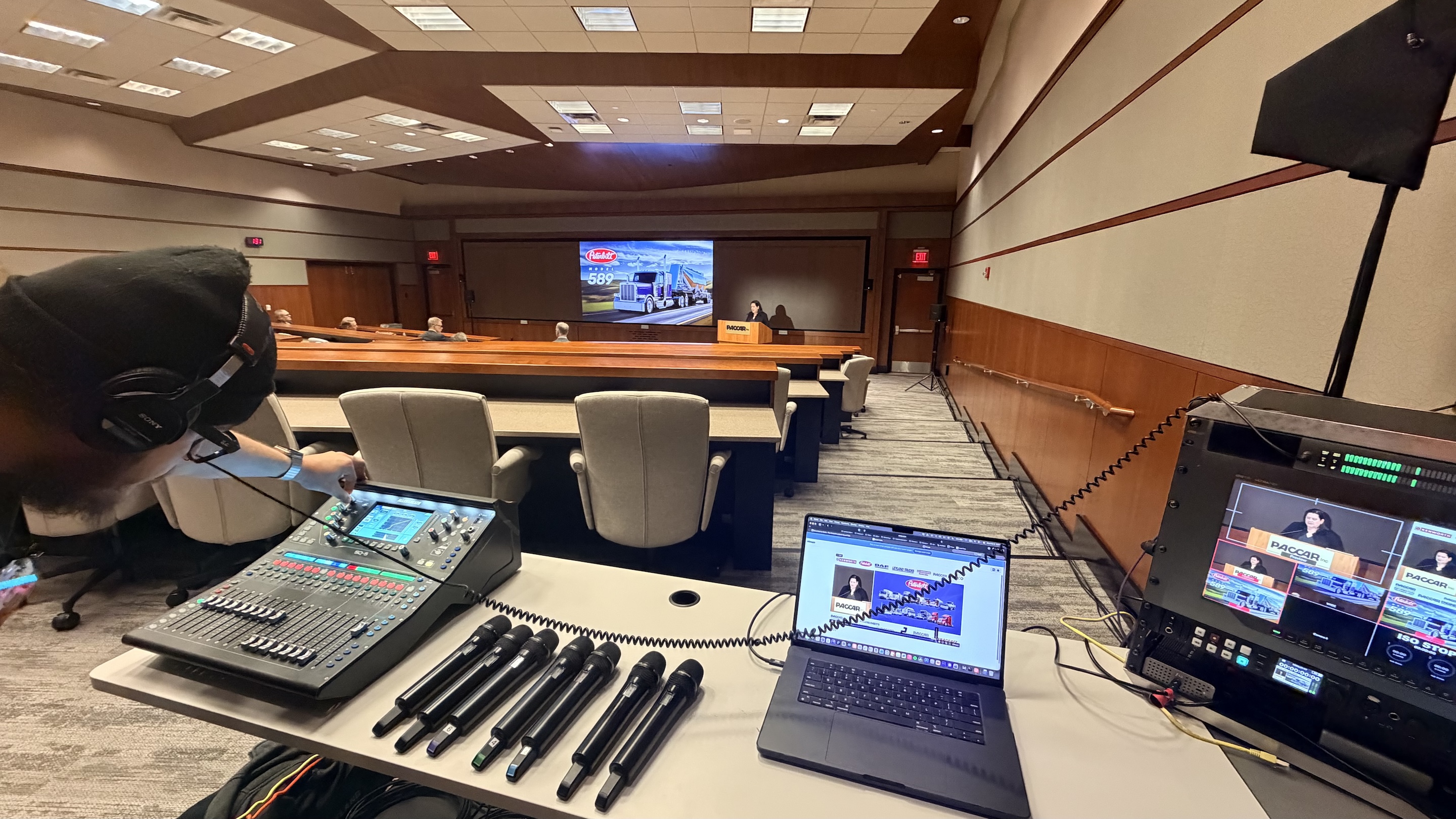
If you're putting together an investor or shareholder meeting and someone said "let's stream it," here's the short version: this isn't a webinar with a fancy login. The whole job is making sure the right people see it, the wrong people don't, and the feed doesn't drop in the middle of your CFO walking through the numbers. Nail those three things and the rest is detail.
I've produced a fair number of these. Annual meetings, private investor updates, board-adjacent sessions, quarterly briefings. The pattern is always the same: high stakes, a smaller but important audience, and material information moving in real time. That changes how you plan it, and it changes what you should be paying for. Here's how I think through one, start to finish.
For most corporate events, anyone with the link can watch and that's fine. An investor meeting is the opposite. The first design decision isn't the cameras or the look. It's who is allowed to see this and how you prove it.
There are a few ways to lock a stream down, and the right one depends on your audience. A password gate works for a small, known investor group. For a public company or anything with a compliance layer, you'll usually want SSO so viewers authenticate against your own directory and nobody outside it can get in. Sometimes it's a registration list checked against approved names. The point is simple: the stream should be invisible to anyone you didn't invite, and there should be a record of who got access. I'd rather over-build this than explain later why a feed showed up somewhere it shouldn't have.
One thing I always raise early: where does the stream actually live? A public YouTube link, even "unlisted," is the wrong tool here. These streams belong on a private, gated player you control, embedded on a page only authorized viewers can reach. That's a five-minute conversation up front that saves a very bad conversation later. If you want the broader playbook beyond investor meetings — board sessions, sensitive all-hands, confidential internal training — I lay it all out in my guide to secure and confidential corporate live streaming.
When you're streaming a company picnic and the feed hiccups, people shrug. When you're streaming the moment leadership presents results to the people who fund the company, a dropout is a real problem. The audience is small but every one of them matters, and they remember.
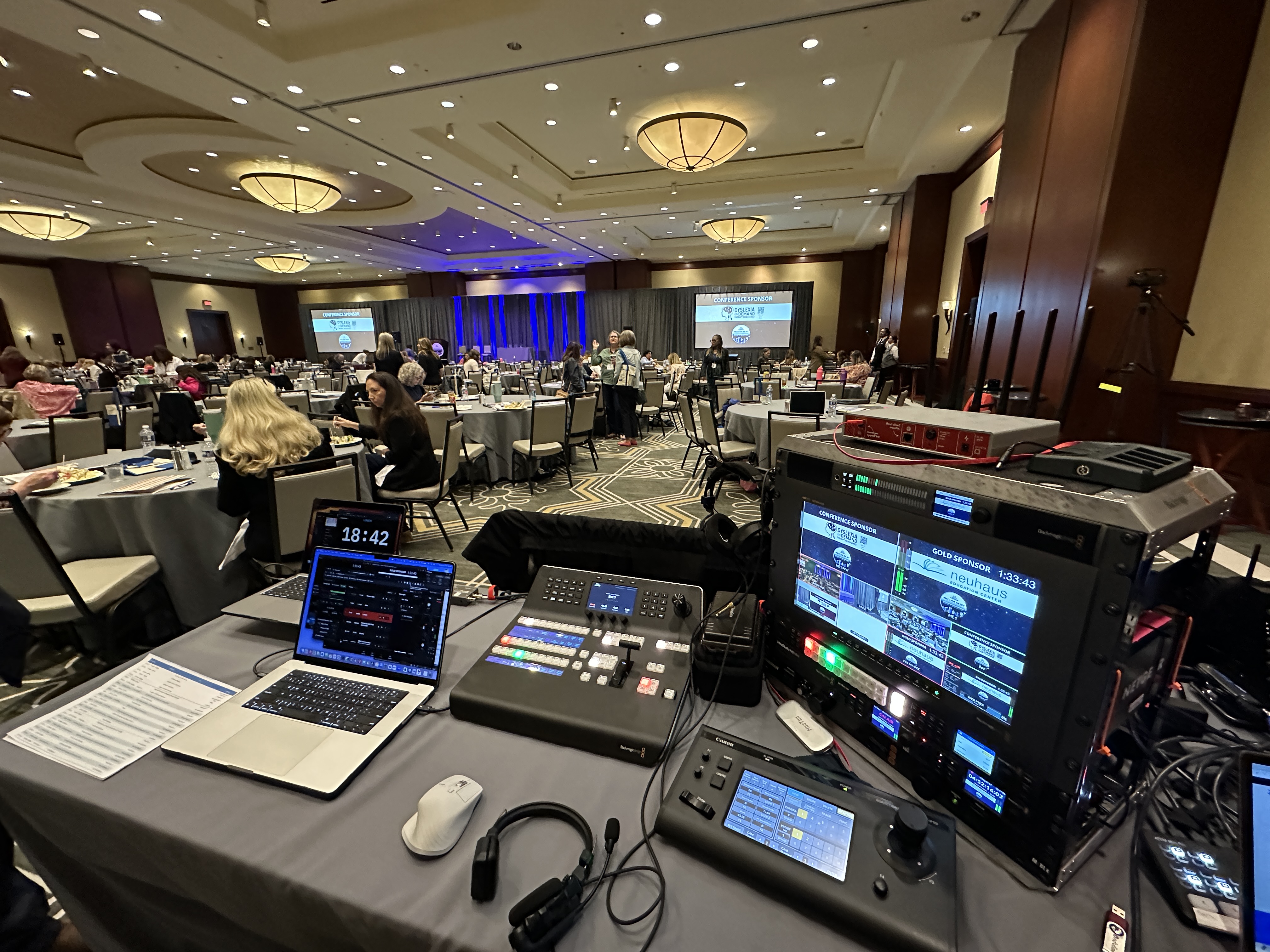
This is where my whole philosophy on redundancy kicks in. You're paying for it not to fail, and that's doubly true when investors are watching. I don't run a single internet connection and hope. I bring a bonded encoder, a LiveU Solo Pro, that pulls from the venue network and a cellular connection at the same time. If one path stutters, the other carries the stream and your viewers never see it. That single piece of gear is the difference between a clean broadcast and a war story.
Redundancy doesn't stop at the connection. Backup power, a second recording running locally, a plan for what happens if a camera or a laptop decides today is the day it quits. None of that shows up in the final product when things go right, which is exactly the point. You're buying the version where nothing goes wrong in front of your investors. For a deeper look at where these productions break down, I wrote about why corporate livestreams fail.
An investor meeting is a credibility event. Your executives are standing in front of the people who decide whether to keep believing in the company, and a webcam-on-a-laptop look quietly undercuts everything they're saying. The production should feel as polished and intentional as the message.
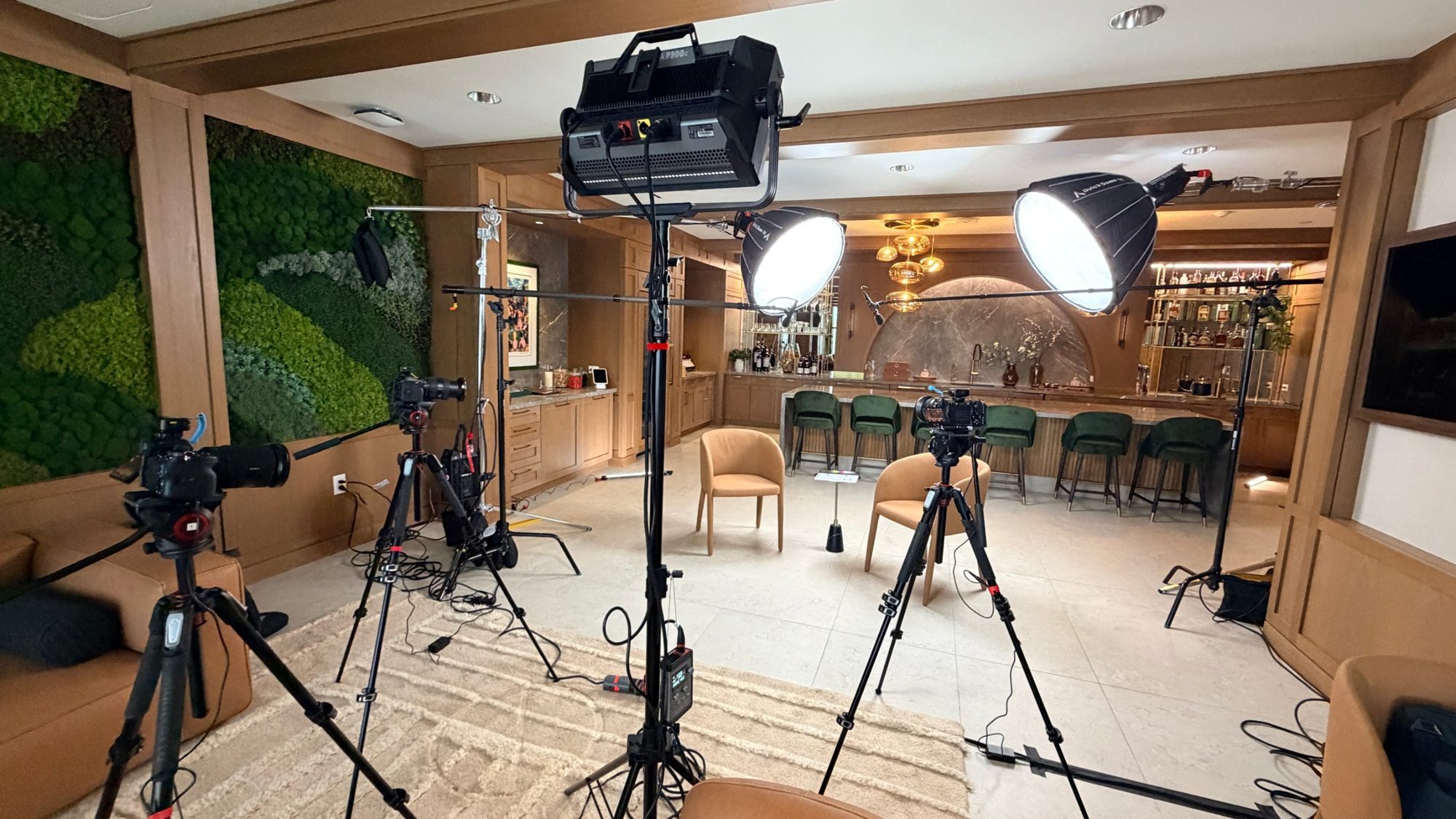
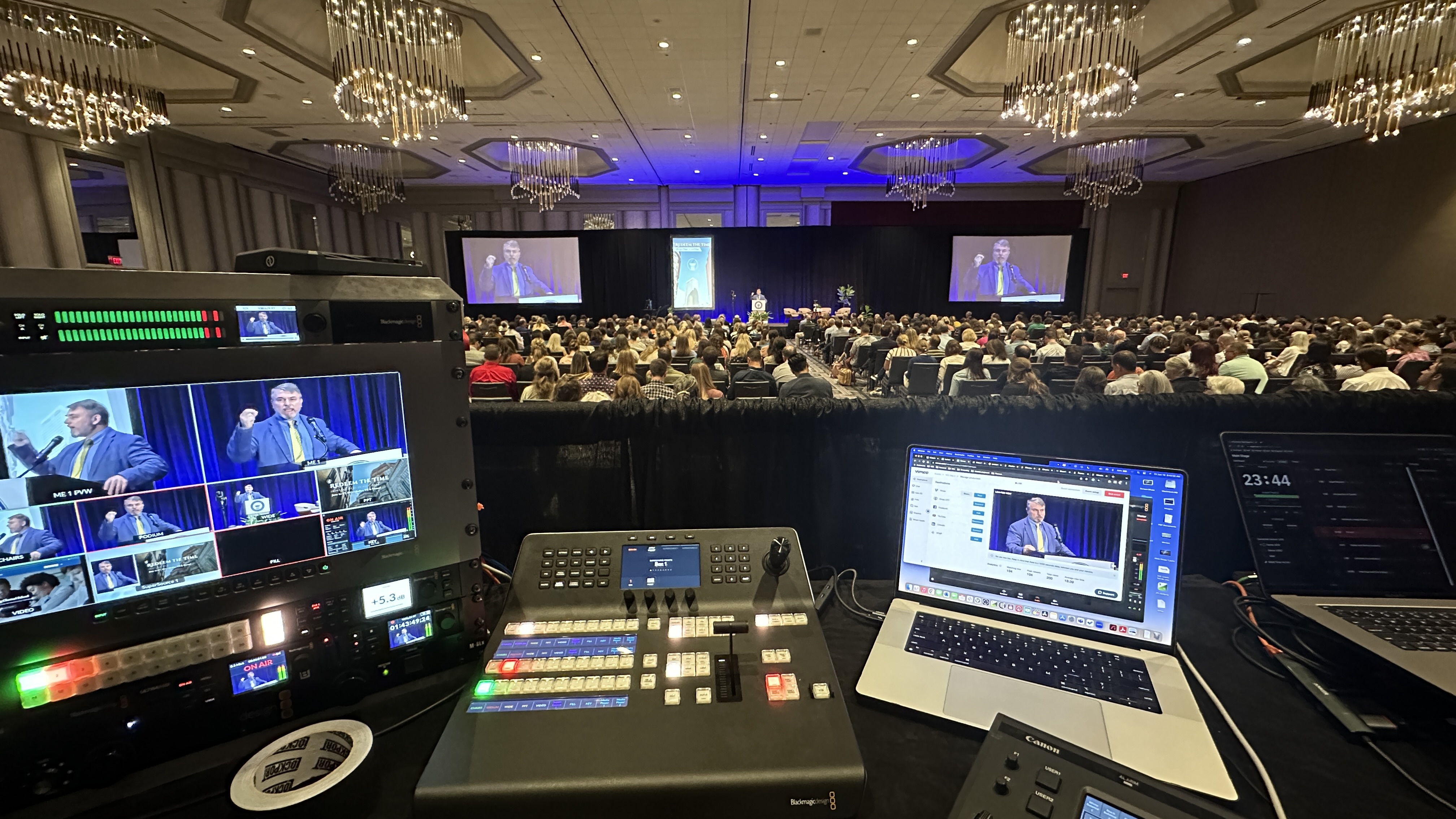
That means real cameras, clean framing, and proper lighting so your presenters look like leaders, not like they're on a late-night video call. I shoot these with broadcast PTZ cameras, Canon CR-N500s, which let me get clean, controlled angles without a crew of operators crowding the room. The switching runs through a Blackmagic ATEM so we can cut between the speaker, the room, and the slide deck smoothly, with lower thirds and a branded look that matches who you are. The goal is a stream that feels like it was produced, because it was. If you're weighing several cameras, here's how I think about multi-camera live production.
You can have a gorgeous picture and still lose the room if the audio is rough. In an investor meeting, every number and every commitment is being parsed closely, and muddy or dropping audio doesn't just annoy people, it creates ambiguity around things that need to be crystal clear.
I run audio properly: wired or quality wireless mics for presenters, a Sennheiser kit I trust, mixed through an Allen & Heath SQ5 board so levels are even and clean the whole way through. We pull a direct feed from the room's system when there is one rather than pointing a camera mic at a speaker and praying. If you want to go deeper on this, here's my take on getting your livestream audio right. It's the part buyers underestimate most, and the part the audience notices first.
A lot of these meetings aren't just a presentation. There's a Q&A, sometimes a formal vote, sometimes a remote audience asking questions alongside people in the room. That's a hybrid event, and it needs to be planned as one rather than bolted on at the last minute.
The questions I ask up front: are remote investors asking questions live, or submitting them in writing to be read? Is there a vote, and does the platform need to capture it? Do the people in the room need to hear remote participants and vice versa? Each answer changes the setup. When it's done right, the remote audience feels like full participants, not an afterthought watching through a window. I've written more on running these well in my guide to hybrid event best practices.
I have a two-crew minimum on in-person events, and an investor meeting is exactly why. One person cannot watch the stream health, mix audio, run cameras, monitor the access gate, and troubleshoot in real time. When the moment matters, you want a set of eyes on the broadcast at all times and a second set free to fix whatever comes up.
The other thing I'll be straight about: when you hire me, you get me or my lead Eli on site, not a random subcontractor who got handed the gig that morning. This is a boutique operation on purpose. For a high-stakes financial event, the person running it should know your setup cold and care whether it goes well. That's worth a lot more than a bigger company that sends whoever's available. Here's what to expect when you hire a livestream company like mine.
Most investor meetings need a clean recording afterward, and the access rules don't stop when the live stream ends. The same people who were authorized to watch live are usually the only ones who should have the archive, and that needs to be handled deliberately.
I always capture a high-quality local recording independent of the stream, so the archive isn't a compressed copy of whatever the internet delivered that day. After the event, we hand off the file the way you need it: a private link, a gated replay page, or a raw file delivered to your team for your own distribution. If legal or compliance needs a record of the meeting, you have a clean one. We talk through all of this before the event so there are no surprises about what gets kept and who can see it.
Pricing depends on scope, but here are honest ranges so you're not guessing. A fully virtual investor briefing with a single operator, where presenters are remote or in one controlled location, starts around $1,595. An in-person event with proper cameras, audio, and a secure stream starts around $3,900. A multi-camera or hybrid production with Q&A, voting, and a larger setup typically runs $5,000 to $15,000 depending on rooms, cameras, and complexity.
I price every event individually because every one of these is a little different, and the security and reliability requirements move the number more than the camera count does. If you want to understand how the pieces add up, I broke it down in how much it costs to livestream an event. The thing I'd push back on is going cheap here. This is not the event to cut corners on, because the cost of it going wrong is measured in trust, not dollars.
If you're getting quotes, the fastest way to a good production is telling your vendor what actually matters for this meeting. Two minutes of context up front saves a lot of back-and-forth and gets you a number that reflects reality.
Tell them: how many investors are watching and how you need to control access (password, SSO, registration list). Whether it's in-person, remote, or hybrid. Whether there's a Q&A or a vote. What the recording needs to be and who's allowed to have it. And what "polished" means to you, since a private briefing for a dozen investors looks different from an annual meeting for a few hundred. If a vendor doesn't ask about the access and security side early, that tells you something. You can read more about choosing the right partner in my piece on the difference between a live stream company versus DIY streaming.
We host it on a gated player you control, not a public link, and we lock access to your audience. Depending on your needs that's a password, SSO that authenticates against your own directory, or a checked registration list. Nobody outside the approved group can reach the stream, and there's a record of who had access.
That's what the redundancy is for. I run a bonded encoder that pulls from both the venue network and cellular at the same time, so if one path fails the other keeps the stream alive without your viewers noticing. We also run backup power and a separate local recording so nothing is riding on a single point of failure.
Yes. We plan the Q&A as part of the setup, whether questions come in as live audio, video, or written submissions read aloud. If there's a vote, we build for that too. The goal is for remote investors to participate fully, not just watch.
Professional. We shoot with broadcast cameras, light your presenters properly, switch cleanly between speakers and slides, and add branded graphics. Your executives should look like the leaders they are, because for this audience the production quality is part of the message.
Yes, and we handle the archive with the same access rules as the live event. We capture a clean local recording independent of the stream and deliver it how you need it, whether that's a private replay page, a gated link, or a raw file for your own team. The people authorized to watch live are typically the only ones who get the archive.
Sooner is better, especially for a meeting tied to a fixed date like an annual or quarterly event. A few weeks gives us time to plan the access setup, test against your systems, and walk the venue. I can move faster when needed, but the security and reliability planning is the part you don't want rushed.
Yes. A town hall is internal and the priority is reaching employees easily. An investor meeting flips that: access control and reliability come first because the audience is external, the information is material, and the stakes are higher. If you're after the internal version, see my guide to town hall live streaming.
DFW is home base and where most of my work is, but I travel for the right events. If you're searching for a live streaming company near you and your meeting is elsewhere, reach out and we'll figure out whether it makes sense.
If you've got an investor or shareholder meeting coming up, I'm happy to talk through what it would take to do it right, no pressure either way. Tell me the audience, the access requirements, and the date, and I'll give you a straight answer on approach and cost. Reach out whenever you're ready and we'll figure out the right fit.
Mark runs DFW Live Stream and has been producing corporate livestreams, conferences, town halls and webinars across Dallas–Fort Worth and around the country since 2017. He writes these from the production desk, not a marketing department, and uses AI tools to help draft and structure them. Every post is read, fact-checked and edited by him before it goes live.