Updated June 2026.
Your CEO just delivered a major company update. New direction, new goals, big changes ahead. The message went out as a company wide email. Three paragraphs, a few bullet points, and a link to a PDF nobody opened. Two weeks later half your employees have no idea what was said. The other half got a version of it through the rumor mill. Sound familiar?
I am Mark White, owner of DFW Live Stream. We produce internal communications video for companies across Dallas Fort Worth and beyond. From quarterly town halls to leadership messages, training videos to company culture videos, we help businesses communicate with their own employees using video that actually gets watched. Internal communications video is a powerful tool for any organization trying to keep people informed, aligned, and engaged.
Let me walk you through the types of internal communications video that work, how to build an internal communication video strategy that fits your company, and why video is the most effective way to reach every employee regardless of where they sit.
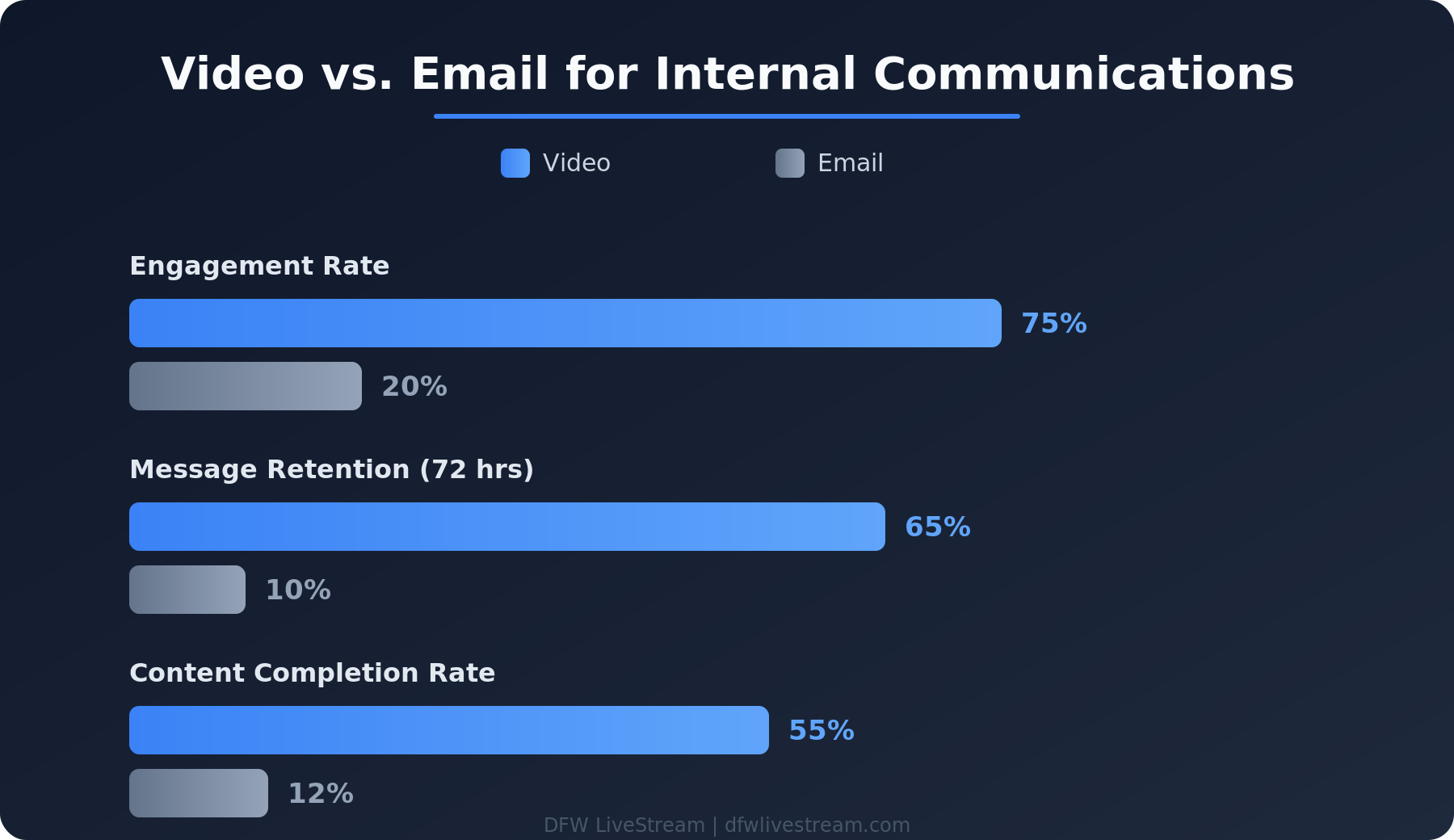
Internal communications have a problem that most companies ignore. The messages are going out, but nobody is paying attention. Emails get buried. Memos get skimmed. All hands meetings only reach the people who show up. When you use video content for internal communications, the message actually sticks. People retain more from watching a video than from reading text, and video content accommodates multiple learning styles in ways that written updates simply cannot.
Internal communications video also helps companies save time. Instead of scheduling meetings across multiple time zones, one video message from leadership can reach every employee at a time that works for them. Employees access the video on their own schedule, rewatch the key points they need, and move on. That is knowledge retention that a live meeting or email chain will never match, and it scales without adding headcount. For any business trying to increase employee engagement and keep people connected to the company's mission, video is the most direct path.
Not every internal video serves the same purpose. Some are built for engaging employees around a shared vision. Some are designed to train employees on new software or explain processes that keep changing. The key is matching the right video type to the right message and audience. Here are the internal communication video ideas that we see work consistently for the companies we produce for.
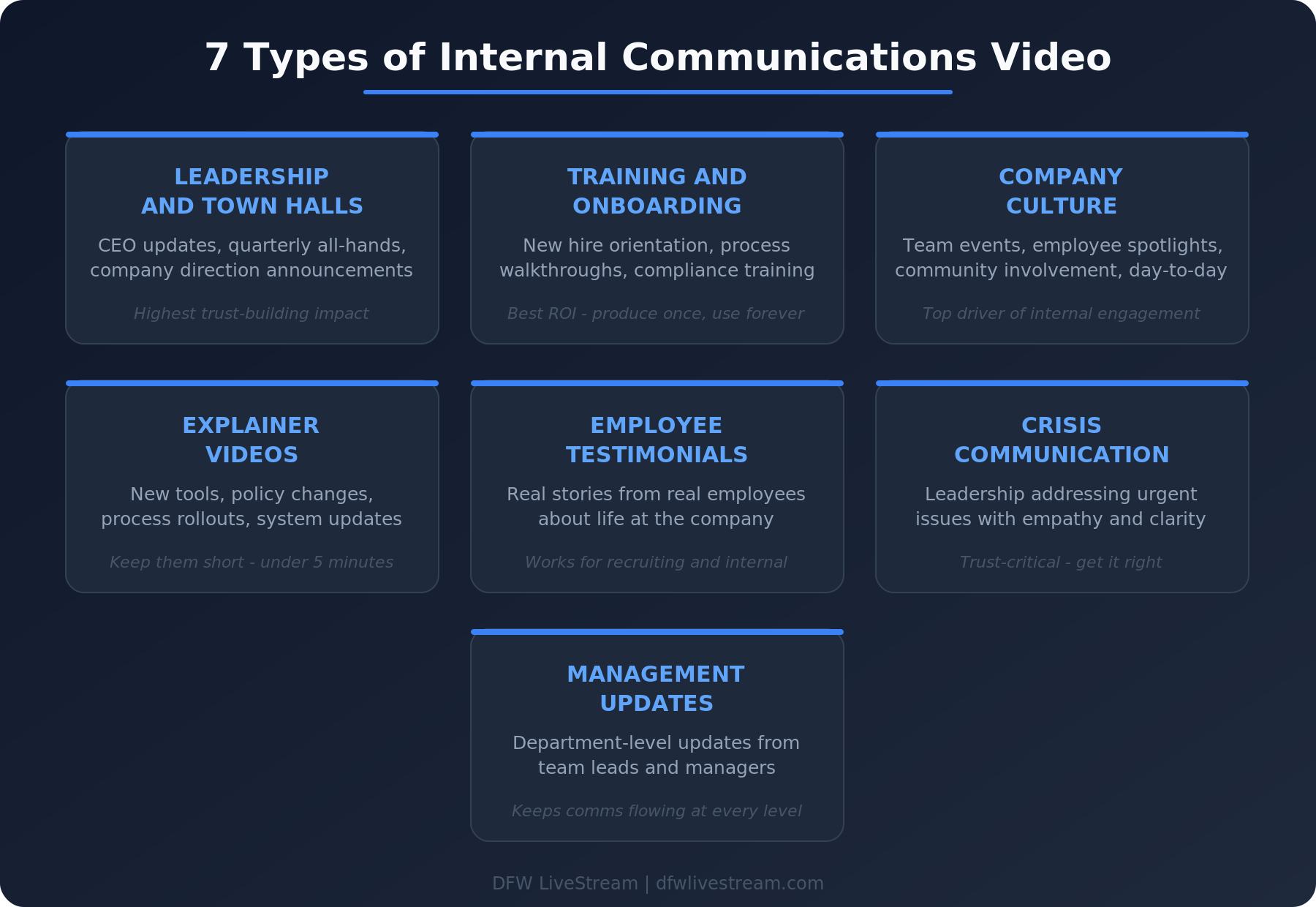
Leadership messages are the backbone of any internal communications strategy. When the leadership team needs to share company direction, address concerns, or rally the team around a new initiative, video is the format that builds trust. A town hall meeting that is professionally produced and streamed to remote employees, distributed teams, and in office employees creates a shared experience that an email never could.
We produce town halls for companies across DFW where executives deliver their message on camera with professional audio, multiple camera angles, and branded graphics. The best ones are not a one way broadcast. They include live Q and A where employees can give direct feedback and ask questions in real time, turning a corporate update into genuine dialogue. We have seen firsthand how video messages from leadership change the energy of an organization when they feel personal rather than corporate.
Training videos are one of the highest value internal communications video types because they scale. You produce the video once and every new hire, every team, every office location gets the same consistent training. Onboarding videos specifically help new hires ramp up faster by showing them how things actually work rather than handing them a binder. New employees who watch onboarding videos feel more connected to the company from day one.
We have filmed training video content for companies where subject matter experts walk through their actual workflow on camera. These are not slide presentations with a voiceover. They are real people showing real work, which is exactly what helps new team members understand how things get done. You can also train employees on compliance, safety, new software rollouts, or anything else that needs consistency across teams. Such videos pay for themselves quickly when you calculate the hours saved by not repeating the same training live every time a new hire starts.

Company culture videos show your employees and prospective employees what life at your organization actually looks like. These are not polished recruitment ads. The best company culture videos capture real moments from team events, community involvement, employee spotlights, and day to day work. They reinforce your company's values and give people a reason to feel proud of where they work.
We filmed a company culture video for a Dallas company during their annual sales kickoff. Employees were having fun, collaborating, competing in team activities. That single video got more internal engagement than anything they had posted all year. Team wins, personal stories, and unscripted moments are what make culture videos feel authentic. They are also excellent for sharing on internal channels to celebrate wins and keep morale high across locations and time zones.

Explainer videos break down complex concepts into something anyone on the team can follow. Whether you are rolling out a new process, introducing a new tool, or communicating policy changes, an explainer video makes it visual and clear. These are especially valuable for companies with employees across different learning styles who absorb information better through video than through documentation.
The best internal explainer videos are short, direct, and focused on one topic. A short video explaining a new expense reporting system is going to get watched. A forty minute recorded meeting about the same topic is going to get ignored. Keep them tight and your employees will actually use them as reference material long after the video stops being new.
Employee testimonials are personal stories told by your own employees about what it is like to work at your company. These internal communications video examples work in two directions. Internally, they boost engagement by celebrating real people and their contributions. Externally, they help attract prospective employees who want to see what the culture is actually like before they apply.
We set up a simple two camera shoot with good lighting and audio, and let employees share their experience in their own words. No scripts, no teleprompters. That authenticity is what makes these videos connect. Employee testimonial videos are some of the most shared video content across internal channels because people love seeing their colleagues featured.

When something goes wrong and your company needs to communicate fast, crisis communication videos let leadership speak directly to existing employees with clarity and empathy. A well produced crisis video shows the face behind the message, which builds trust in moments when trust matters most. Video messages during a crisis carry more weight than any written statement because employees can see and hear the sincerity. These should be produced quickly but still maintain a professional standard so the message lands the way it is intended.
Not every internal video needs to come from the top. Management videos from department heads and team leads keep communication flowing at every level. Regular video updates from managers give their teams context on priorities, celebrate team achievements, and share upcoming events or deadlines. These work especially well for remote teams and international teams who do not get the hallway conversations that in office employees take for granted.
If you are looking for internal communication video ideas to start with, here are the ones that deliver the fastest results. Record a quick video from your CEO sharing the company's vision for the quarter. Film a walkthrough of a new process or system your team is rolling out. Create an onboarding video series for new hires that covers everything from benefits enrollment to who to call when something breaks. Produce a monthly recap video highlighting team achievements and upcoming events.
For companies with offices spread across time zones, a weekly or monthly video update from leadership replaces the meeting that nobody can attend live. Record it once, share the video link, and every employee gets the same message. These internal corporate video ideas do not require a massive budget. They require a plan and a commitment to showing up on video consistently.
Creating internal communications video without a strategy is how companies end up with a dozen random videos that nobody watches. A real internal communication video strategy starts with understanding what you need to communicate, who needs to hear it, and how video fits into your broader internal communications strategy.
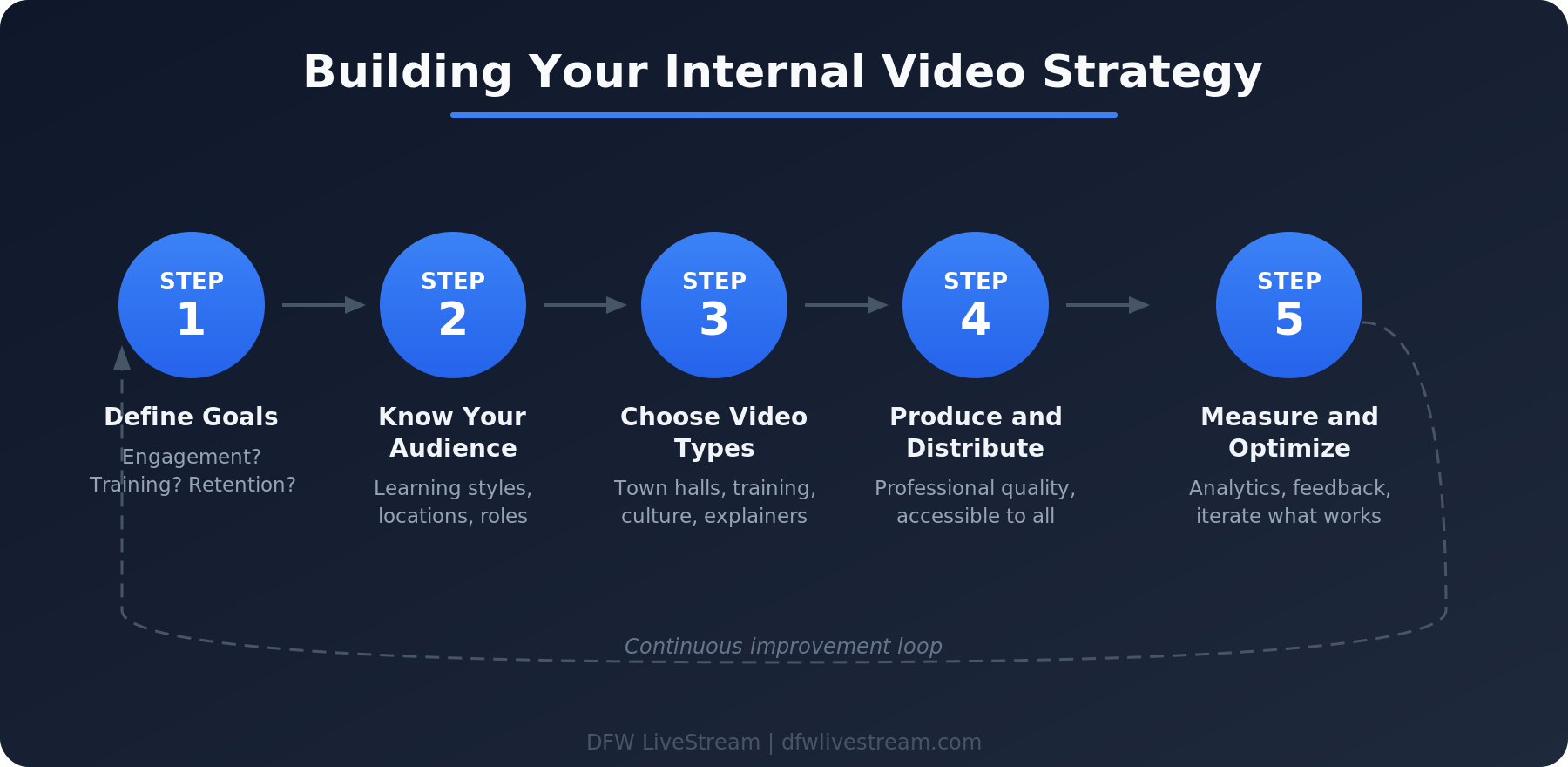
Every internal comms video strategy should start with clear goals. Are you trying to improve employee engagement? Reduce the time it takes to onboard new employees? Keep remote teams connected to company culture? The answers determine what types of video you produce, how often you produce them, and where they live. A strong video strategy ties every piece of video content back to a measurable outcome.
Your employees are not all the same. Some learn by watching. Some learn by doing. Some need to read along. The best internal communications video programs account for varied learning styles by combining video with supporting materials. Add captions for accessibility. Include a summary document alongside the video. Use interactive elements like chapter markers so viewers can jump to what matters to them. When you design video for different learning styles, employee understanding improves across the board.
For hybrid companies and organizations with remote teams across global teams and multiple time zones, internal video is the connective tissue. Remote collaboration depends on people feeling included even when they are not in the room. Video bridges that gap in ways that email and chat cannot. Record leadership messages so employees in every time zone can watch them. Use video for team meetings recaps so nobody misses context. Internal comms videos keep distributed teams aligned without requiring everyone to be online at the same time.

Static video is good. Interactive video is better. Adding interactive elements like polls, quizzes, clickable chapters, and embedded links turns passive watching into active engagement. Interactive formats work especially well for training videos and compliance content where you need to confirm that employees actually absorbed the material. Enhanced engagement from interactive video means higher completion rates and better knowledge retention.
Videos offer more than just a way to push information out. When you add interactive formats and give employees a way to respond, ask questions, or navigate their own path through the content, you turn internal communications into a conversation rather than a broadcast. That is what engaging employees actually looks like at scale.
If you are investing in internal communications video, you need to know whether it is working. Video analytics tell you who watched, how long they watched, where they dropped off, and what content resonated. This data shapes your internal comms video strategy going forward and helps you boost engagement over time by doing more of what works and less of what does not. Without that data you are guessing, and guessing does not scale when you are producing video content for an entire organization.

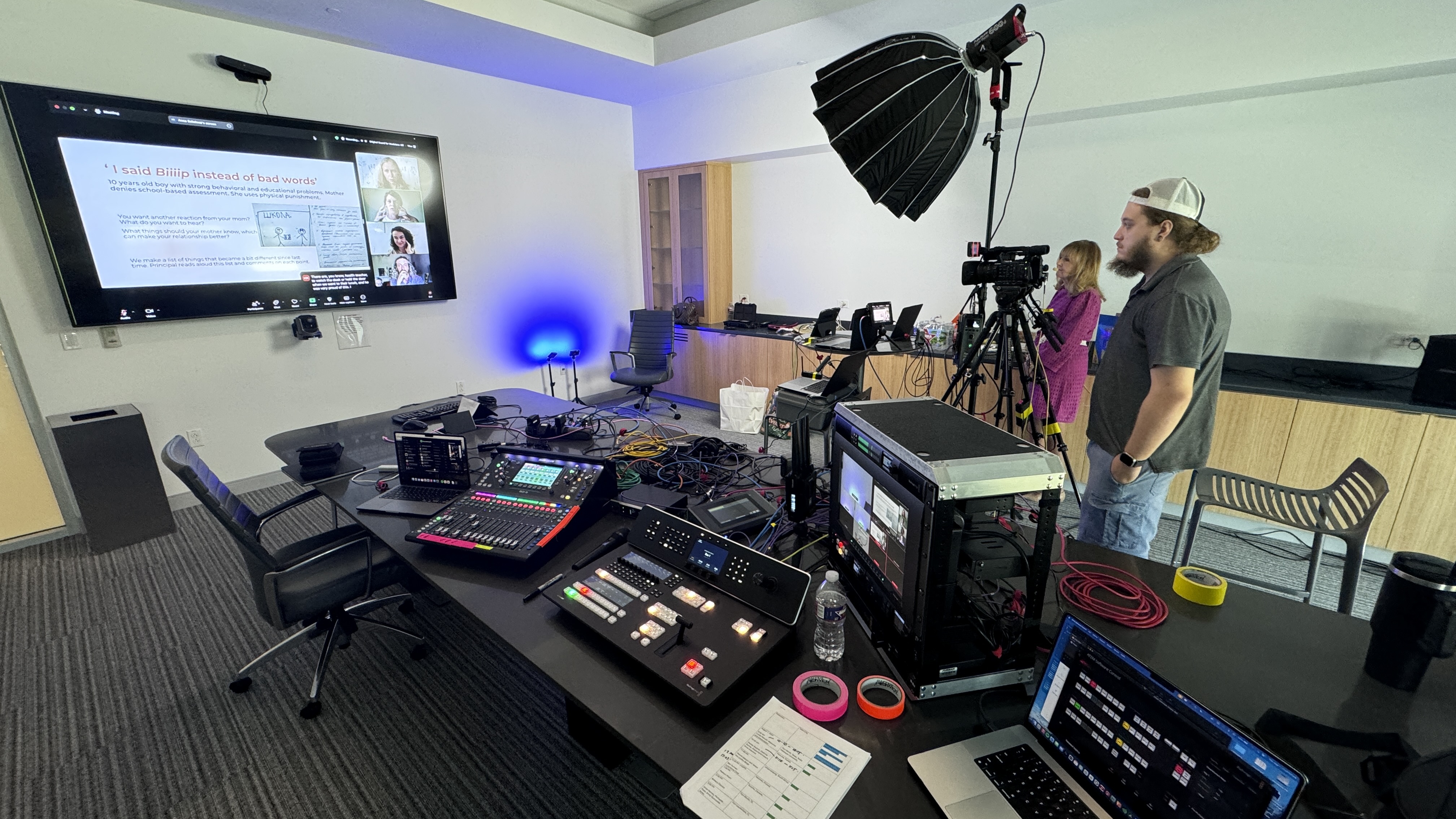
We produce internal communications video for companies ranging from tech company startups to enterprise corporations. One of our clients, a transportation company here in Dallas, hired us to consult on their internal video studio setup and teach their team how to produce their own town hall video content. We redesigned their AV setup and trained them on bringing in remote presenters via video link from across the world. They now produce regular internal comms videos for their entire organization.
Another client flies us to their corporate events across the country to produce high stakes investor meetings and internal town halls. The production quality matters because leadership is on camera and the video lives on internally for months. Comments from their team said it felt like watching a talk show. That is what professional internal communications video production looks like when it is done right. These internal communications video examples show that video scales from small studio shoots to major corporate productions.
Internal communications have relied on email for decades, but the numbers tell a different story. Internal emails have declining open rates and even lower read through rates. Video flips that dynamic. When leadership shows their face and speaks directly to the team, engagement goes up. Employees remember more. The message feels personal rather than corporate.
Corporate communications teams are starting to realize that employee engagement does not come from more emails. It comes from video messages that feel human. When your leadership team records a video that connects people to the company's values, that is what drives real employee engagement. Internal comms videos give your team something they can rally around instead of another message that disappears into their inbox.
Video is also a powerful tool for communicating nuance. Tone of voice, facial expressions, body language. These are things that get lost in text. When your CEO needs to address sensitive topics like company restructuring or market challenges, a video message carries weight that a written memo cannot. Internal video creates emotional connection that is impossible to replicate in an email. For any organization serious about engaging employees and improving internal communications, video is the medium that moves the needle.
One of the biggest advantages of internal communications video is that it works asynchronously. Record the video once and employees across every time zone can watch it when it fits their schedule. For companies with global teams and offices in multiple countries, this eliminates the impossible task of finding a meeting time that works for everyone. Add captions, provide a transcript, and host the video on an internal platform where all employees access it easily. That kind of accessibility makes video the backbone of any serious internal communications effort.
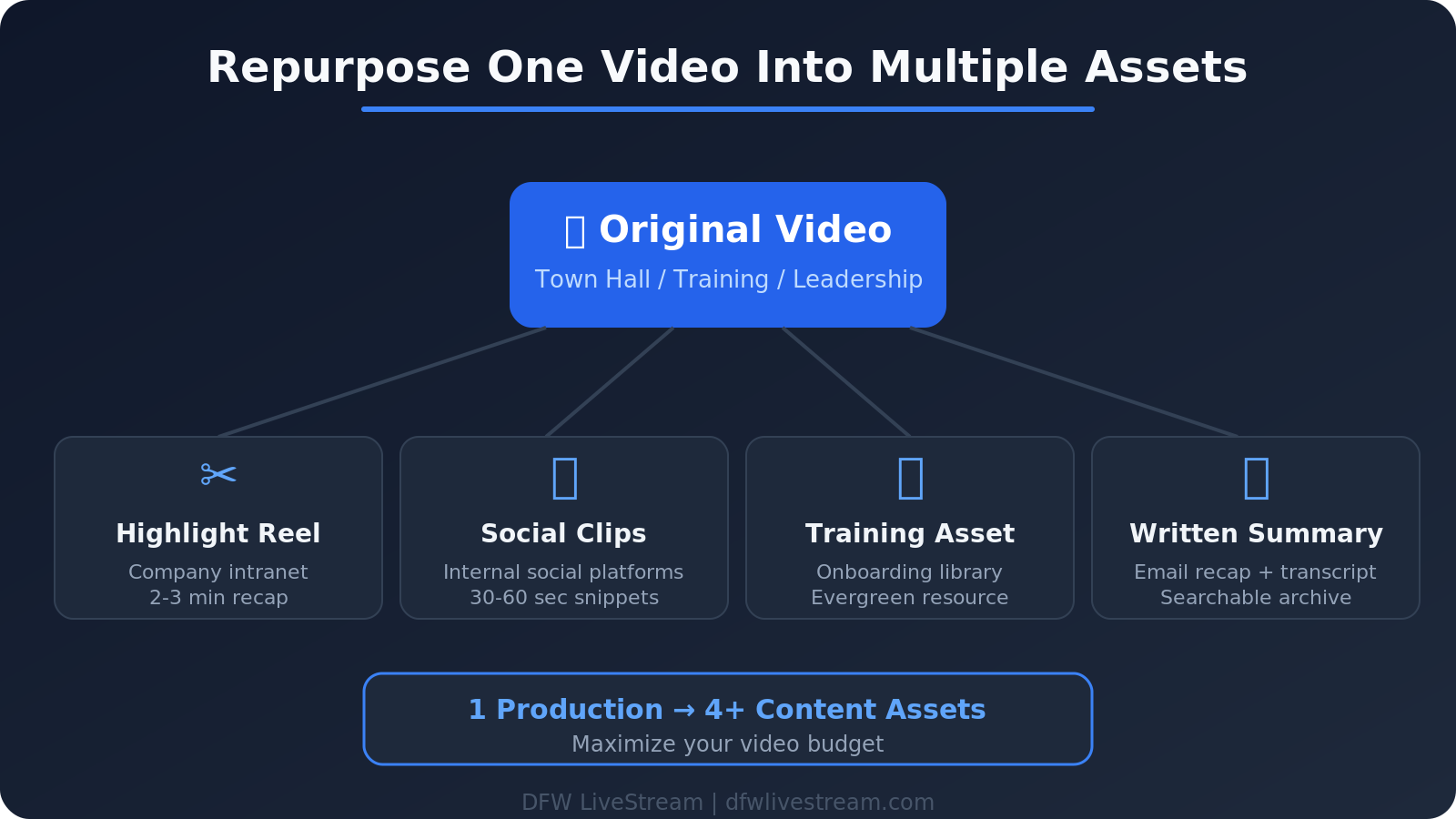
A single video can serve multiple purposes across multiple channels. The town hall recording becomes a highlight reel for the company intranet. The training video becomes an onboarding resource. Leadership messages get clipped into short updates for internal social platforms. When you plan your video with repurposing in mind from the start, you get more value from every production. This is how companies with a smart internal communications strategy stretch their video budget further and keep their internal video program sustainable over time.
If your company is ready to start using internal communications video to reach your employees, we would love to help. We work with businesses across Dallas Fort Worth to plan and produce professional internal video that gets watched. Whether you need a full town hall production, a series of training videos for new hires, company culture videos for recruiting, or a consulting session on building your internal video strategy, that is exactly what we do at DFW Live Stream.
I am Mark White with DFW Live Stream. Give us a call or fill out the form on our site and let us help you build an internal communications video program that keeps your team connected, informed, and engaged.
Pretty much the full range. Town halls and leadership messages, training and onboarding videos, company culture videos, explainer videos, employee testimonials, crisis communications, and regular team updates from managers. The right type depends on what you are trying to say and who needs to hear it, so we usually start by figuring that out before we ever pick up a camera.
That is one of the biggest reasons companies use video for this. We produce the message once and your people watch it whenever it fits their schedule, no matter what time zone they are in. We can also stream a live town hall and pull in remote presenters via video link, then add captions and a transcript so everyone has access to the same message.
When leadership shows their face and speaks directly to the team, the message feels human instead of corporate. People remember more from watching than from reading an email, and tone, expression, and body language carry nuance that text just loses. Add interactive elements like polls, quizzes, and clickable chapters and you turn passive watching into a real conversation.
Video analytics. We can see who watched, how long they stayed, where they dropped off, and which content actually resonated. That data tells you what to do more of and what to cut, so your internal video program keeps getting better instead of being a guess. Without it you are flying blind, especially once you are producing for a whole organization.
No. A lot of high impact internal videos are simple by design, like a quick quarterly message from your CEO or a clean two camera testimonial shoot. We scale to fit, from a single studio session up to a multi camera town hall or a traveling corporate production. What matters more than budget is having a plan and showing up on video consistently.